New Russian Study Reconstructs a Lost Technology
The possibility of advanced civilization before the end of the last ice age remains extremely controversial in academic circles, but new discoveries in Siberia are threatening the orthodox timeline as never before. Several respected Russian scientists now claim that discoveries in the Ust-Kova area of the Krasnoyarsk region show that, more than 24,000 years ago, highly advanced technology and sophisticated religious thinking was widespread throughout the region.
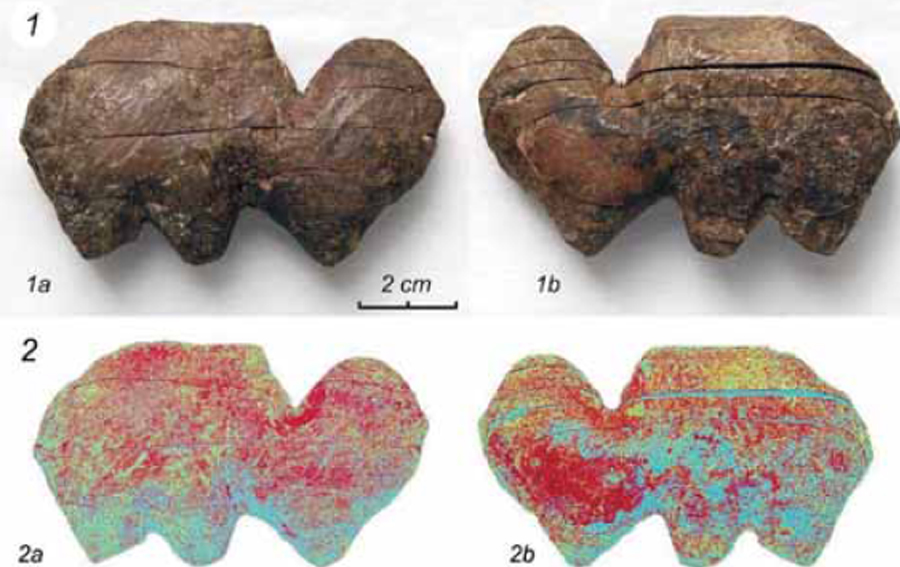
In September, 2020, in a new paper published in the Asian scientific journal Archaeological Research, Russian scientists looked at ivory artifacts found at Mal’ta Site on the Belaya River in the Irkutsk region (https://www.sciencedirect.com/science/article/pii/S235222671930114X). Using detailed microscopic analysis, they were able to successfully reconstruct the tools and techniques used by the artisans, and then to show that the same ivory processing technology had been used to create similar artifacts found in another region connected by way of the Belaya River, implying regional sharing of an advanced paleolithic culture.
One figurine found, features a mammoth, painted on both sides, red on one, and black on the other. The inference to be drawn, the scientists think, is a metaphysical and sophisticated, one—‘red’ representing blood and life, and ‘black’ standing for darkness and death.
The researchers from Siberian Federal University in Krasnoyarsk and the Institute of Archeology and Ethnography were under the direction of Dr. Lyudmila Lobova, an archaeologist from Novosibirsk State University.
The new findings in Krasnoyarsk come on the heels of discoveries in Denisova Cave in Siberia’s Altai region. In 2018, amidst the bones of extinct animals, including a woolly mammoth, was a finely tooled bracelet of virtually modern appearance, that, nevertheless, was dated to at least 40,000 years ago. Other artifacts on the scene are as much as 125,000 years old.
According to Dr. Anatoly Derevyanko, of the Museum of History and Culture in Novosibirsk, the bracelet is “stunning,” requiring a very high level of skill for its creation, something not previously associated with the Denisovans.
Described as a species of hominins from the Homo genus, but distinct from either Homo sapiens or Neanderthal, the Denisovans were long considered much less developed than modern humans or even Neanderthals, but the bracelet discovery disrupted all such thinking. Producing the artifact, say Russian experts, would have required skill 30,000 years ahead of its time. Made from chlorite, the bracelet used stone originating 125 miles away. It was apparently held in place with a leather strap, passing through a hole that could not have been created without a high speed drill.
In 2019 a sophisticated ivory ‘tiara’ made from the tusk of a Woolly mammoth, and dated to 45, to 50 thousand years ago, was found in the same cave (https://siberiantimes.com/science/casestudy/news/homo-sapiens-or-denisovans-who-made-stunning-cave-jewellery-and-artefacts-up-to-48000-years-ago/).
Below are articles from our back issues that connect very directly to this content.
Available for purchase and download.
 Issue #38
What Happened at Tunguska?