Posted on

Blood and the Grail

By J. Douglas Kenyon

“One of the most sacred Catholic artifacts ever,” stolen in June from a French church, has now been returned by the repentant thief. According to Britain’s The Daily Mail newspaper, a professional art detective recovered the relic, believed by the faithful, to contain actual drops of Jesus’ blood. Arthur Brand, a reputed Dutch ‘Indiana Jones,’ tracked down the object taken, along with other valuables, from a church in Fécamp. The thief, apparently fearing he was cursed for his deed, left the relic anonymously in a cardboard box outside Brand’s house. Dutch police, it is reported, are returning it to France.

When it comes to sacred relics though, the ‘holy grail’ is… well… the “Holy Grail.” And on that point, holy “blood” has different meanings for different people. In 1982 researchers Michael Baigent, Richard Lee, and Henry Lincoln argued that the real grail is actually a bloodline. That narrative from their best-selling book The Holy Blood and the Holy Grail, was later made world famous in The Da Vinci Code by novelist Dan Brown. While the former had enjoyed considerable success, it was dwarfed by the latter, which became one of the best-selling novels ever. Hollywood’s version of The DaVinci Code, directed by Ron Howard, would make big waves at the box office. To anyone familiar with the first book, it was clear that the second owed much to it. Both books claimed that Jesus was married to Mary Magdalene, with whom he fathered children, and that the resultant bloodline survives even now. Baigent, Leigh, and Lincoln took their claims to court, charging both Brown and publisher Random House with stealing their material, but the court sided with Brown.


As for the actual cup, or chalice, used by Jesus at the Last Supper and revered by early Christians: in their 2015 book, The Kings of the Grail, researchers Margarita Torres and Jose Ortega del Rio claimed that a bejeweled onyx vessel on display in Leon, Spain, is the original chalice. It has been in the basilica there since the eleventh century, and the cup’s age has been officially certified as indeed from the period 200 BC to AD 100.
It is doubtful, of course, if other potential claimants to the title of the ‘true’ Holy Grail will surrender without a fight. Many in England still believe the true grail was left by Joseph of Arimathea, in the Chalice Well at Glastonbury. Similar claims have been made for Ireland and other locations. Nazi SS head Heinrich Himmler thought an Aryan Holy Grail was to be found in Spanish Montserrat.


Grail legends of the middle ages tell us the guardian of the Holy Grail was the secretive chivalric order of the Knights Templar. Initially popularized by Wolfram von Eschenbach, himself a templar, the story of Parsifal, provided what is arguably the most comprehensive and compelling version of the grail legend. In addition to revelations regarding the templars, Eschenbach also claimed the Holy Grail could be something other than a chalice or platter (he said it was a stone), and that the original legend of the Holy Grail came not from the West but from the East. Eschenbach was emphatic on the latter point, stating that the originator of the grail legend was Flegetanis, an astrologer from the ancient middle east, Babylon perhaps, who “found it in the stars.”


In the meantime, those of a more metaphysical persuasion argue that literal interpretations often miss the real point of the grail story, that it is a symbol or archetype representing the true self of a virtuous and enlightened individual. They would maintain that the serpent in the tree in the Garden of Eden was a metaphor for kundalini energy that, serpent-like, travels up the hu­man spine, activating spiritual centers or chak­ras positioned along it—the “tree of life”—before ultimately bestowing ‘gnosis’ and immortality upon him or her. Others claim the serpent was an actual human being of ancient times who taught forbidden secrets of the holy grail to humanity.


According to Templar scholar Mark Amaru Pinkham, writing in Atlantis Rising Magazine #62, “John the Baptist was part of a lineage of holy grail masters known as the Mandean Nasurai that originated in the East.” This lineage began its journey on the paradisaical island of Sri Lanka before traveling west and eventually settling on the banks of the Tigris and Euphrates Rivers in southern Iraq. For the Mandeans, Sri Lan­ka was the Garden of Eden, a notion that was spread by Templars, as well as some religions, like Islam, which also considered the island to be home to the “water of life” or Fountain of Youth.


Scotland’s Rosslyn Chapel, one of a few surviving templar churches, thought to hide many ancient secrets, is still identified by practicing templars as the Chapel of the Holy Grail.

AR #62

Quest for the Grail
the Sri Lanka Connection
Posted on

The Cleopatra Connection

By J. Douglas Kenyon

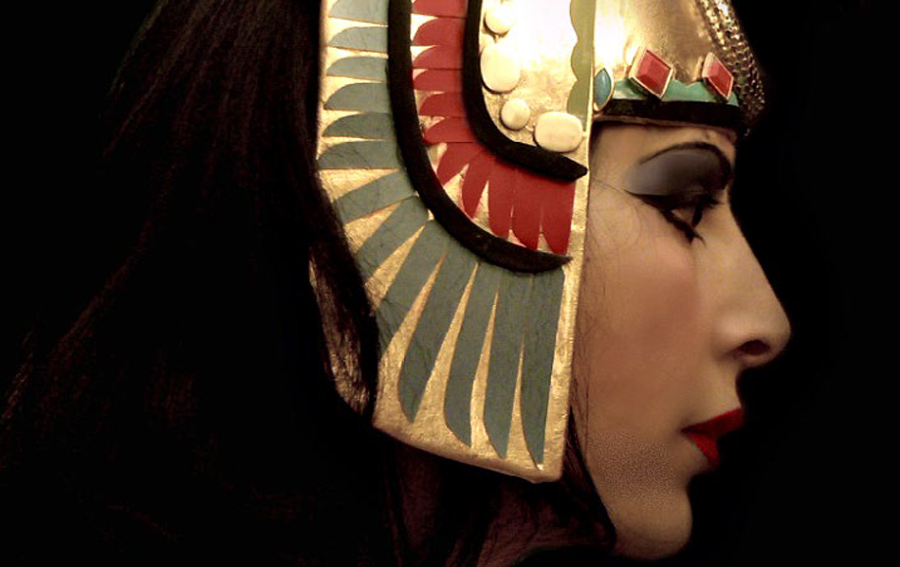
The lost tomb of Cleopatra VII may not be lost much longer. That, at least, is the hope of archaeologists digging through ancient temple ruins at Taposiris Magna a few miles southwest of Alexandria, Egypt. Discovery there of two gilded mummies—a male and a female of high-rank—was trumpeted in a July television documentary as a “sensational” find, evidence the long-sought tomb of Cleopatra and her lover, Roman renegade Mark Antony, could be nearby.

While no final resting place has yet been confirmed, the pair’s tragic demise in 30 BC has never lacked for public interest. Mark Antony, reportedly, fell on his sword, and Cleopatra allowed herself to be bitten by an Asp. Portrayed by Elizabeth Taylor and Richard Burton, and by many writers, including Shakespeare and George Bernard Shaw, the couple’s romance, as well as the search for Cleopatra’s tomb has attracted many curious researchers. Now, according to Dr. Kathleen Martinez, archaeologist from the Dominican Republic, and a 14-year veteran of Taposiris Magna (‘tomb of Osiris’), Cleopatra considered herself an incarnation of Isis, and wanted to reenact the goddess’s heroic reassembly of the dismembered body of her husband Osiris. Not everyone, however, believes Taposiris Magna was her tomb’s location.

In the 1970s and ’80s underwater ruins at Alexandria were investigated, using ‘remote viewing’ techniques like those developed by the U.S. military and the CIA. Parapsychologist Stephan Schwartz claimed to have identified palaces built there by Cleopatra and Mark Antony. Moreover, he thought some sites there might be associated with Ptolemaic landmarks like the Pharos Lighthouse and the Alexandria Library. The Schwartz ‘Alexandria Project’—though ignored by mainstream Egyptology—was cited by many as a great demonstration of intuitive archaeology. That view was somewhat vindicated in 1998, when French archaeologists led by Frank Goddio unveiled spectacular underwater photographs of the ‘ruins of Cleopatra,’ thought to have sunk off Alexandria in a fourth-century earthquake. But even though hopes ran high for a while, no missing royal tombs have yet surfaced, and many mysteries remained unsolved.

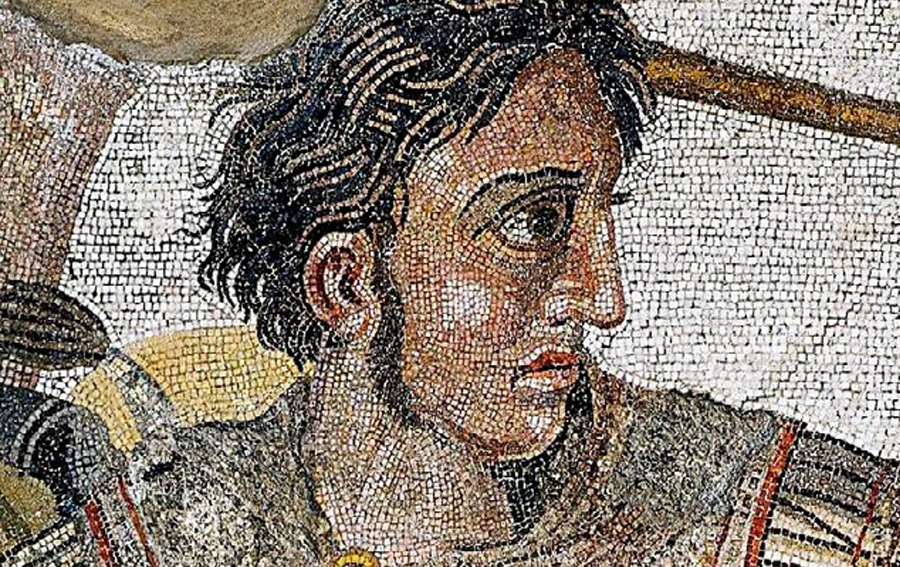
Last of the Ptolemaic monarchs, Cleopatra traced her lineage to Alexander the Great, who, after conquering the known world, capped his brief but spectacular career by establishing the great port city at Alexandria and in 305 BC, placing his general and friend Soter on Egypt’s throne as Ptolemy I. The Ptolemaic dynasty would last for almost three centuries, abruptly ending with the death of Cleopatra VII.

The connection with Alexander the Great adds another intriguing dimension to the story. Some researchers have noted surprising and ironic parallels between the lives of Alexander the Great and Jesus the Christ. Black studies researcher Arthur Lewin (Africa is Not a Country) points out (africaunlimited.com) that, like Jesus, Alexander the Great died in his 33rd year and declared that the man married to his mother, was not his father. Alexander, indeed, believed he was the Son of God, claiming that his actual father was Ammon, king of the gods of Egypt. After defeating Persian emperor Darius in 333 BC at the Battle of Issus (a name suggesting ‘Jesus’ to some and ‘Isis’ to others), and freeing Egypt from centuries-old Persian domination, he was declared ruler of Egypt, becoming simultaneously Emperor of Persia, Pharaoh of Egypt and monarch of the entire Greek peninsula. In other words: ‘King of Kings.’

Alexander the Great, Pompeii, circa 100 BC

British author Ralf Ellis (Cleopatra to Christ), thinks there is an even deeper connection between the Ptolemaic line of Egypt and Jesus Christ. Cleopatra VII, he argues, was in fact—through her daughter Queen Thea Muse Ourania—the grandmother of Jesus.

Citing ancient sources like Josephus Flavius and the Jewish Talmud, Ellis, places the events of Jesus life about 30 years later than does standard first-century chronology, and, while dismissing the familiar tale of a poor and illiterate carpenter from Nazareth, as church propaganda, Ellis identifies Jesus the Christ as Jesus of Gamala, a historically documented Jewish high priest and king, whose birth might well have been attended by Persian wise men from the East. ‘Christ,’ or ‘christos’ is Greek for ‘anointed one,’ and refers to the old testament method of choosing the kings of Israel. The city of Gamala, incidentally, is widely considered birthplace of the Zealot movement of rebel Jews seeking to overthrow Rome.

According to historian Josephus Flavius and the Talmud, the First Jewish Revolt of  AD 64-65 was fomented by a group, known as “the Fourth Sect,” led by Joshua (Jesus) ben Gamala, Jewish high priest and a well-educated wealthy descendant of Julius Caesar, Queen Cleopatra, and Phraates IV of Persia. A legitimate heir to the throne of Rome, he was a threat to both Jewish and Roman authorities. Jesus of Gamala and two other leaders of the Fourth Sect, Josephus reported, were condemned to crucifixion in the Kidron Valley in the AD 60s, but, according to Ellis, Jesus survived.

The plot, as they say, thickens.