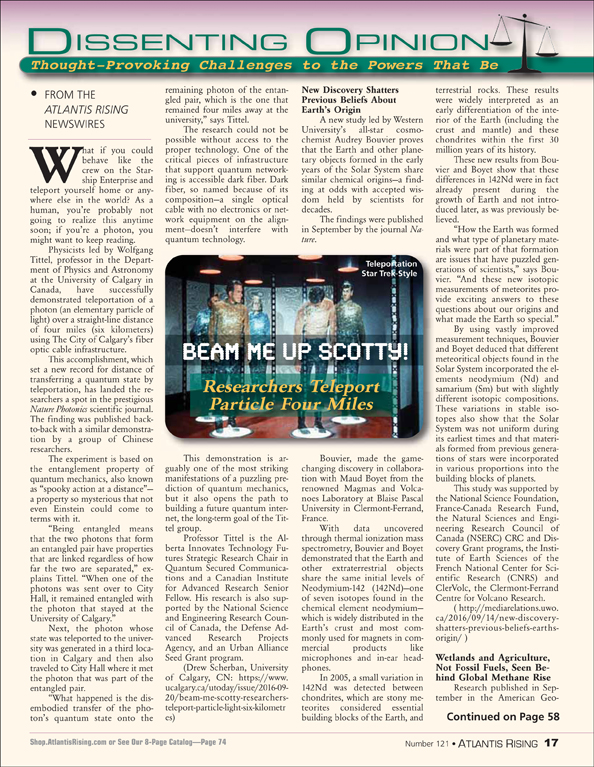
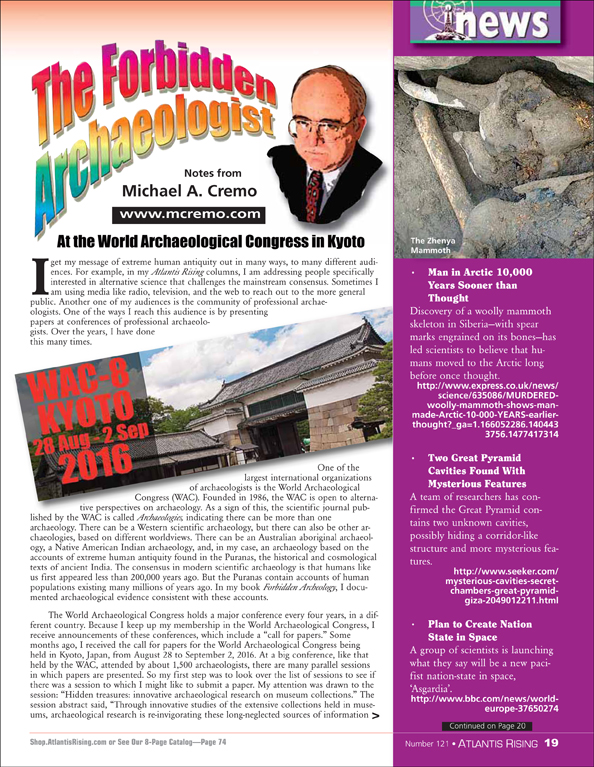
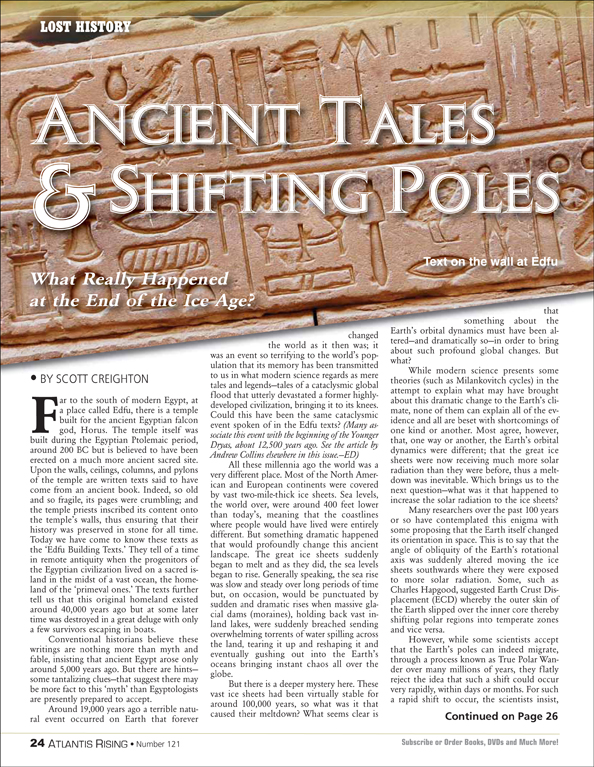
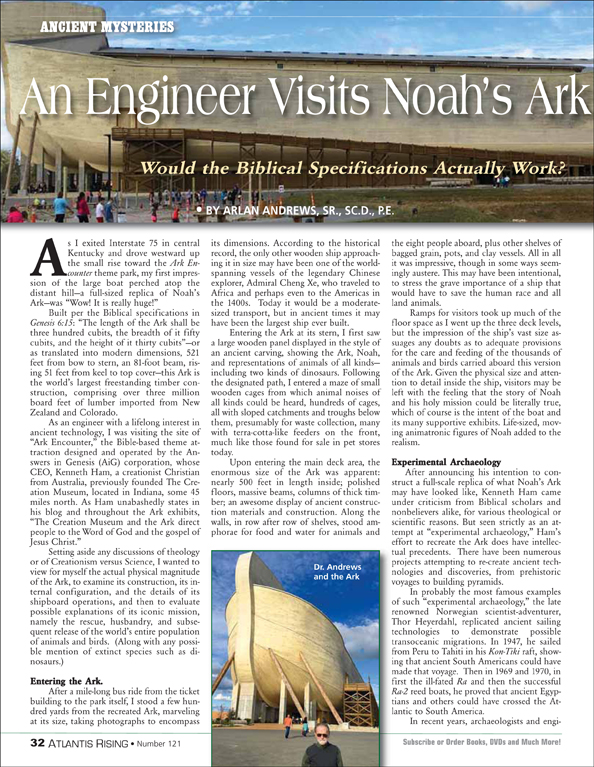
On 14 July 2016, my wife Katie and I had the privilege of attending, by special invitation, the opening of the first public exhibition of the “Papyri of King Khufu from Wadi Al-Jarf” at the Egyptian Museum, Tahrir Square, Cairo. None other than Zahi Hawass, the former Minister of Antiquities, has called the Khufu Papyri “the greatest discovery in Egypt in the twenty first century” (quoted by Alexander Stille, Smithsonian Magazine, October 2015). Listening to the dignitaries speak, I wondered. Viewing the papyri through the glass case, I could not help but compare the texts, and the Khufu cartouches in particular, to the reputed “Khufu inscriptions” I have inspected firsthand deep inside the Great Pyramid.
Over the years there has been a fair amount of discussion—perhaps better characterized as heated controversy—over the authenticity of the painted inscriptions found in the Relieving Chambers (also known as Relief Chambers or Chambers of Construction) above the King’s Chamber of the Great Pyramid. It is not my intention to express here an opinion concerning this ongoing debate. I have visited the Relieving Chambers on more than one occasion, and others, to make their points on either side of the argument, have used my photographs. (Unfortunately, my photos have appeared in books, articles, and on the Internet without my permission; in some instances, they have been attributed to others or simply stolen.)
In the past I have stated that, in my assessment, all indications are that the inscriptions in question are genuinely ancient and not nineteenth century forgeries (R. Schoch, Pyramid Quest, 2005). However, I am always willing to look at new evidence and shall continue to do so as it is put forward. More importantly, as far as I am concerned, at the moment it does not make any difference to the “bigger story” whether or not the Relieving Chambers’ inscriptions are genuine or fake. Why do I say this? For a very long time these inscriptions, and the famous Khufu cartouche in particular (found in the uppermost chamber, known as Campbell’s Chamber), were viewed as the only direct evidence that the Old Kingdom Fourth Dynasty pharaoh Khufu (Cheops; ruled circa 2580–2550 BCE) was associated with the Great Pyramid. However, this all changed in 2013 with the discovery of the Khufu Papyri. Supposedly we now have direct and indisputable evidence that Khufu ordered the construction of the Great Pyramid. The Relieving Chambers’ inscriptions are simply a distraction at this point. Even if it can be demonstrated that the inscriptions in the Great Pyramid are fraudulent, the evidence of the papyri ostensibly establishes the Khufu connection.
The Khufu Papyri were discovered in 2013 during excavations of the ancient Old Kingdom harbor at Wadi al-Jarf on the coast of the Red Sea, Egypt (carried out by a Franco-Egyptian Mission, co-directed by Pierre Tallet and El Sayed Mahfouz). Found in a sealed context, the Khufu Papyri are indisputably ancient, and they include the records of the Egyptian official Merer who, in charge of about 200 men, was responsible for transporting materials and supplies during the reign of Khufu. In particular, the Khufu Papyri contain explicit records of limestone from the Tura quarries (on the opposite bank of the Nile from the Giza Pyramids Plateau) being transported to the “Horizon of Khufu”—presumably the site of the Great Pyramid—during the twenty-seventh year of Khufu’s reign (see Pierre Tallet and Gregory Marouard, 2014, Near Eastern Archaeology, vol. 77, no. 1).
Despite the evidence, details, and context of the Khufu Papyri, do they “prove” (a word that, as a scientist, I generally avoid—current “facts” are always subject to questioning and revision) that Khufu had the Great Pyramid constructed from scratch? Or, as I have long suspected, did Khufu simply usurp and restore an earlier—perhaps much more ancient—structure? I do not deny that the Great Pyramid was faced with Tura limestone during the time of Khufu, but I suspect that this was the refurbishing of an ancient structure and it does not demonstrate that Khufu actually had the Great Pyramid built de novo. Rather, it is quite possible that he appropriated unto himself a preexisting monument. Along these lines, I have expressed the opinion that even if the inscriptions in the Relieving Chambers are authentic, they do not “prove” that Khufu constructed the Great Pyramid, only that he had some involvement with it—such as adding to and restoring a more ancient structure that, prior to Khufu, may have been a truncated pyramid that did not include the King’s Chamber or the Relieving Chambers (see discussion in Pyramid Quest). But are there any texts that might support an earlier date for the origins of the Great Pyramid?
Spurred on by the new evidence of the Khufu Papyri, I was inspired to revisit some of the old evidence bearing on the origins of the Great Pyramid and its relationship to Khufu. A key text along these lines is the so-called Inventory Stela (a.k.a., the Stela of Khufu’s Daughter). While in Egypt (July 2016), Katie and I made it a point to visit the Temple of Isis, on the Giza Plateau near the Great Pyramid, where this stela was found in 1858. As I noted in Atlantis Rising #120 (November-December 2016), although the physical stela probably dates to the seventh or sixth century BCE, it purports to be a copy of a text that goes back to Old Kingdom times, some two thousand years earlier.
On the Inventory Stela, It Is Recorded:
“Live the Horus: Mezer, King of Upper and Lower Egypt: Khufu, who is given life. He found the house of Isis, Mistress of the Pyramid… beside the house of the Sphinx… on the northwest of the house of Osiris… He built his pyramid beside the temple of this goddess, and he built a pyramid for the king’s daughter Henutsen beside this temple” (J. H. Breasted, 1906, Ancient Records of Egypt, vol. 1, p. 85).
If Khufu found the house of Isis, who was Mistress of the Pyramid, then this means that the pyramid—presumably the Great Pyramid, which was “the Pyramid”—was already in existence during the reign of Khufu. Perhaps Khufu restored the Great Pyramid, in addition to building the smaller pyramids still seen in the vicinity of the Great Pyramid. Furthermore, where or what is the “house [that is, temple] of Osiris”? Based on the above text and further elaboration found elsewhere on the stela, my colleague Robert Bauval has suggested that the Temple of Osiris might be none other than the so-called Valley Temple just southeast of the Great Sphinx, which, since the limestone portions were constructed at the same time when the core-body of the Sphinx was carved, I have established has its origin thousands of years prior to the time of Khufu (see discussion in the forthcoming book by R. Schoch and R. Bauval, Origins of the Sphinx, currently scheduled for publication by Inner Traditions in 2017).
The Inventory Stela inscription, which is systematically dismissed as a late fabrication by mainstream modern Egyptologists, is not the only text that suggests a far greater antiquity for ancient Egypt and thus some of its monuments, including the Great Pyramid. We should consider as well the work of an early “Egyptologist,” one who wrote over two thousand years ago.
Manetho’s Aegyptiaca (History of Egypt), forms the basis of today’s generally accepted chronology of Egypt, including the division of its rulers into dynasties. Manetho was an Egyptian priest and historian writing in Greek, but most likely fluent and literate in the old Egyptian language and writing, who lived and worked during the early Ptolemaic period. A letter attributed to Manetho is believed to have been addressed to the ruler Ptolemy II Philadelphus (reigned 285–246 BCE). Despite its importance, Manetho’s Aegyptiaca is known only through fragments, excerpts, and extracts of summaries recorded by later writers, such as the Jewish historian Titus Flavius Josephus (37–circa 100 CE) and the Christians Sextus Julius Africanus (circa 160–circa 240 CE) and Eusebius of Caesarea (260/265–339/340 CE), who cited and used Manetho’s work for their own ends (for general background information on Manetho and his works, as well as a translation of the surviving extracts of Manetho’s History, see W. G. Waddell, translator, Manetho, 1940; reprinted 1964).
Modern Egyptologists typically use as their starting point for dynastic Egyptian history the reign of Menes (listed by Manetho, and also listed as an early or first king of Egypt in the royal list on a wall of the temple of Seti I at Abydos and a royal list from the temple at Karnak now in the Louvre, Paris). Menes, who is often equated with the early king Narmer, is generally credited with unifying the distinct kingdoms of Upper and Lower Egypt, thus founding the first dynasty, circa 3100 or 3050 BCE.
Prior to Menes, Manetho lists 25,000 years of rulers of Egypt. These are typically dismissed by modern Egyptologists as being nothing more than myth and fantasy, perhaps to impress upon Manetho’s readers the great antiquity and therefore superiority and preeminence of Egypt.
Manetho begins his list with “Hephaestus”. Hephaestus was the Greek god of blacksmiths and metallurgy, associated with fire and volcanoes. More generally, he was the god of craftsmen, artisans, and persons who created physical objects. His Roman equivalent was Vulcan, and in classical times he was equated with the Egyptian god Ptah who was the creator god and the god of craftsmen. According to the version of creation of the priests of Memphis, which dates back to at least the Old Kingdom (circa 2500 BCE) and was recorded on the Shabaka Stone of circa 700 BCE, Ptah was the creator or life giver to all of the other gods, including the Sun god Atum who, in turn, was the creator god according to the priests of Heliopolis (see George Hart, Egyptian Myths, 1990).
Hephaestus/Ptah was succeeded by his son “Helios” (the sun god or Atum/Atum-Re/Re), followed by “Sôsis” (Shu), “Cronos” (Geb), Osiris, “Typhon” (Set or Seth), and “Orus” (Horus). Following Horus, there was an unbroken succession of kings lasting 13,900 years. Manetho, according to Eusebius, related that there followed a period of 1,255 years during which demigods ruled Egypt, which in turn was followed by a line of kings lasting another 1817 years, then 30 kings of Memphis who reigned during the course of 1,790 years, followed by 10 kings of This (Thinis) who reigned for 350 years. Subsequently another series of demigods, or “Spirits of the Dead,” ruled Egypt for 5,813 years. Adding all of these periods together, we come to a total of 24,925 years of kings ruling over Egypt from Horus to Menes.
Eusebius, in order to reconcile such a long period of time with Christian Biblical chronology, suggested that the “years” of Manetho were actually months, which would mean that the kings ruling Egypt prior to Menes only push the time frame back by somewhat over 2,000 years. As Waddell (1940, p. 4) noted, “There is no evidence that the Egyptian year was ever equal to a month.” Eusebius also suggested that the reigns of kings might have overlapped; that in some cases separately listed kings ruled simultaneously in different parts of Egypt (such as in Upper and Lower Egypt), which may well have been the case. Even so, the pre-Menes chronology of Manetho pushes the origins of the kingship of Egypt back by over ten millennia prior to conventional dynastic Egypt—to use modern geological terminology, back to the end of the last ice age.
Manetho is not the only source for a series of Egyptian kings prior to Menes. The Turin Papyrus king list, dating from the time of Ramesses II (13th century BCE), lists various gods and kings, including the Shemsu Hor (Followers or Worshippers of Horus) as having reigned over Egypt prior to Menes (see Waddell 1940, p. 5, who suggested that the Shemsu Hor correspond to the 5,813 years of rule by demigods recounted by Manetho). Not unexpectedly, Egyptologists generally regard these as “mythical.” Likewise, the Palermo Stone and its associated fragments (which formed a stela probably dating to the Fifth Dynasty, circa twenty fifth or twenty fourth century BCE, portions of which are found in several museums) records various kings prior to the unification of Egypt under Menes.
Reinforcing the extreme antiquity of Egypt, Herodotus was told by one of his Egyptian guides that during the course of Egyptian history “the sun had twice risen where it now set, and twice set where it now rises” (John Anthony West, Serpent in the Sky: The High Wisdom of Ancient Egypt, 1979, p. 229). According to West, R. A. Schwaller de Lubicz interpreted this to mean that Egyptian history went back in time by one-and-a-half precessional cycles. In the time of Herodotus, circa 450 BCE, the Sun “rose” on the vernal equinox in the region of the sky where Aries and Pisces slightly overlap and “set” on the winter equinox in the region of the sky near the boundary between Libra and Virgo. Approximately 13,000 years earlier (half a precessional cycle), the Sun “rose” on the vernal equinox in the region of the sky near the boundary between Libra and Virgo and “set” where Aries and Pisces slightly overlap. Going back another 13,000 years, the Sun rose and set on the equinoxes as it had in the time of Herodotus. Going back 13,000 further, to circa 39,450 BCE, the Sun once again “rose” in the region marked by the boundary between Libra and Virgo and “set” where Aries and Pisces slightly overlap. Thus during the 39,000 years preceding Herodotus, the Sun had twice risen where it set in circa 450 BCE, and it had twice set where it rose in circa 450 BCE. This would place the earliest history of Egypt in the period of circa 39,000 BCE, which is in broad agreement with the approximate 28,000 BCE origin of Egyptian kingship according to Manetho.
Could such an incredible antiquity for Egyptian, or proto-Egyptian, civilizations have any basis in reality? Or is it all just myth and exaggeration, tall tales, as the orthodox Egyptologists and historians insist? Based on my work re-dating the Great Sphinx, as well as studying evidence of extremely early civilizations around the world, I am convinced that an early cycle of civilization flourished prior to the end of the last ice age (prior to 9700 BCE; see my book Forgotten Civilization, 2012). Returning to the arguments over the age of the Great Pyramid, in the context of an origin for Egyptian civilization prior to circa 10,000 BCE, the pharaoh Khufu may well have simply adopted, adapted, and refurbished a preexisting structure, one that was already extremely ancient in the twenty sixth century BCE. Classical pharaonic Egypt did not arise de novo 5,000 years ago, but rather, emerged from a legacy that traces its roots back many millennia, perhaps tens of millennia, earlier.
Robert M. Schoch, Honorary Professor at the Nikola Vaptsarov Naval Academy and a full-time faculty member at Boston University, earned his Ph.D. in geology and geophysics at Yale University. Best known for re-dating the Great Sphinx, he is the author of books both technical and popular, including Forgotten Civilization: The Role of Solar Outbursts in Our Past and Future.
Visit: RobertSchoch.com
Egyptology
Jan/Feb 2017- #121