Posted on

Advanced Ancient Tech: Proof Found in India

Cave Site featured in Lost Ancient Mysteries Special Issue

A new YouTube documentary explores the mysteries of the Ajanta and Ellora ‘caves,’ of India, where thousands of years before modern technology, vast, yet intricate, structures were carved out of living rock. Cave 16, the amazing Kailasa Temple, the largest monolithic structure in the world, carved out of a single piece of rock, dwarfs the rock temples of Ethiopia! While some historians claim to know how such a virtual subterranean city could have been created, they do not have the necessary expertise to explain the caves, while engineers who do are completely at a loss to account for just how any of these amazing structures came to be. And as for what became of the millions of tons of rock displaced by the construction, nobody knows.

YouTube player

Here now in a new YouTube video, Disclose Truth TV presents the incredible evidence: https://www.youtube.com/watch?v=k1SE25mURhc

YouTube player

Much of the mystery of India’s Ajanta and Ellora caves has been detailed in the pages of Atlantis Rising Magazine, and is discussed by world-famous geologist Robert Schoch in our new special issue “The Quest for Lost Ancient Secrets with Robert M. Schoch, Ph.D.” available now as a PDF, or in a glossy 300-page-plus print-on-demand deluxe coffee-table edition. Included in this stunning special edition are many hi-resolution photos of the site personally taken by Dr. Schoch and his wife Katy Ulissey. Other related topics covered in both the book and the documentary include the underground cities of Turkey, the electric universe, Easter Island’s Rongo Rongo writing, and solar plasma discharges.

The Quest for Lost Ancient Secrets

with Robert M. Schoch, Ph.D.

Posted on

Dinosaurs Got Sick Too

Researchers discover first evidence indicating dinosaur respiratory infection

The scientists from around the country, including University of New Mexico Research Assistant Professor Ewan Wolff, discovered the first evidence of a unique respiratory infection in the fossilized remains of a dinosaur that lived nearly 150 million years ago.

The study, “The first occurrence of an avian‑style respiratory infection in a non‑avian dinosaur,” was recently published in the Scientific Report.

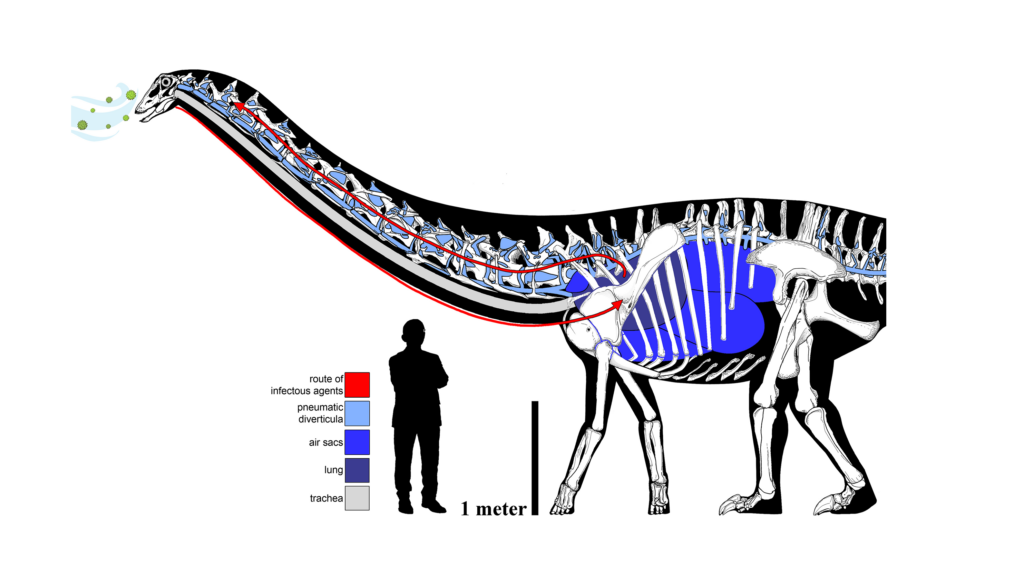
Researchers examined the remains of an immature diplodocid – a long-necked herbivorous sauropod dinosaur, like “Brontosaurus” – dating back to the Late Jurassic Period of the Mesozoic Era. The dinosaur nicknamed “Dolly,” discovered in southwest Montana, had evidence of an infection in the area of its neck vertebrae.

The study, led by Cary Woodruff of the Great Plains Dinosaur Museum, identified never before seen abnormal bony protrusions that had an unusual shape and texture. These protrusions were located in an area of each bone where they would have been penetrated by air sacs. Air sacs are non-oxygen exchanging parts of the respiratory system in modern birds that are also present in dinosaurs. The air sacs would have ultimately connected to “Dolly’s” lungs and formed part of the dinosaur’s complex respiratory system. CT imaging of the irregular protrusions revealed that they were made of abnormal bone that most likely formed in response to an infection.

“We’ve all experienced these same symptoms – coughing, trouble breathing, fever and here’s a 150-million-year-old dinosaur that likely felt as miserable as we all do when we’re sick.” Woodruff said.

Researchers say these findings are significant because Dolly was considered a non-avian dinosaur, and sauropods, like Dolly, did not evolve to become birds; only avian theropods evolved into birds. The authors speculate this respiratory infection could have been caused by a fungal infection similar to aspergillosis, a common respiratory illness that affects birds and reptiles today and can lead to bone infections. In addition to documenting the first occurrence of such a respiratory infection in a dinosaur, this fossilized infection also has important anatomical implications for the respiratory system of sauropod dinosaurs.

“This fossil infection in Dolly not only helps us trace the evolutionary history of respiratory-related diseases back in time, but it also gives us a better understanding of what kinds of diseases dinosaurs were susceptible to,” Woodruff said.

“This would have been a remarkably, visibly sick sauropod,” Wolff said. “We always think of dinosaurs as big and tough, but they got sick. They had respiratory illnesses like birds do today, in fact, maybe even the same devastating infections in some cases.”

The researchers suggest that if Dolly had been infected with an aspergillosis-like respiratory infection, it likely experienced flu or pneumonia-like symptoms such as weight loss, coughing, fever and breathing difficulties. As aspergillosis can be fatal in birds if untreated, a potentially similar infection in Dolly could have ultimately caused the death of the animal.

“We have to continue to expand our knowledge of ancient diseases. If we look hard enough, we may begin to understand more about the evolution of immunity and infectious disease,” Wolff said. “When we work together between multiple specialties – veterinarians, anatomists, paleontologists, paleopathologists, and radiologists we can come away with a more complete picture of ancient disease.” 

Great Plains Dinosaur Museum, University of New Mexico

The ‘Silurian Hypothesis’ Reconsidered
AR #130


Posted on

America’s Mound Builders “Sophisticated Engineers

A Major New Study Makes the Point

The builders of the first civilization in America were “sophisticated engineers.” That is the startling conclusion of a major new study published in September, 2021, in Southeastern Archaeology by a team from Washington University (https://www.tandfonline.com/doi/full/10.1080/0734578X.2021.1958445). Far from being the simple hunter gatherers, as they are usually portrayed in anthropology texts, the indigenous mound-building engineers of America were capable of creating, in a matter of months, or even weeks, enormous earthen structures that could survive for many centuries, no easy task.

According to study authors, anthropology professors Tristram R. Kidder, Edward S. and Tedi Macias,  “We as a research community—and population as a whole—have undervalued native people and their ability to do this work and to do it quickly in the ways they did.”

The massive Poverty Point World Heritage site in Northern Louisiana is the prime focus of the new study. Consisting of a massive 72-foot-tall earthen mound and concentric half circle ridges, the structures were constructed without the luxury of modern tools, domesticated animals or even wheeled carts, from nearly 2 million cubic yards of soil supposedly by hunter gatherers, over 3,400 years ago.

According to Dr. Greg Little, Atlantis Rising contributor, and author of The Illustrated Encyclopedia of Native American Indian Mounds & Earthworks, the story of America’s mound builders is far greater, and much older than conventional archaeology has led us to believe. “The oldest known mounds are now dated to over 6000-years. Underwater structures could be even older,” wrote Little. In 1997 carbon dating of the site of Watson Brake, located about 50 miles from Poverty Point, pushed the date of the “oldest” mound to about 3400 BC. And then, in 2003, excavations and new carbon dating at Poverty Point showed that one of the small mounds at the site was constructed around 4000 BC. Moreover, said Little, the earliest mound dates are now being pushed back even further.

In a remarkable series of discoveries, most of which have occurred in the twenty-first century, two other mound builder cultures have also been revealed. According to Little, ‘shell rings,’ the name applied to the oldest of these, belies the immensity and importance of the structures. The shell rings are all located in coastal regions, and, in recent years, archaeologists with the National Park Service have investigated them extensively. Another mound-builder culture, found more inland, is probably related to the shell rings and is characterized by similar mounds erected in conjunction with extensive canal systems.

The shell rings, says Little, were constructed at times of lower sea levels. As the water rose, the sites were abandoned and the inhabitants moved further inland. More mounds were built, and as the waters rose, they moved still further inland. Chances are that these underwater mounds will extend to many thousands of years earlier than what we today consider to be the “oldest mounds.”

America Mound Builders
(AR #96, Nov/Dec 2012


Posted on

Lost Land Rediscovered

The Legend of Doggerland Lives On

Hailed as ‘Britain’s Atlantis,’ an ancient land at the bottom of the North Sea is drawing new attention. Doggerland: Lost World in the North Sea, a currently running (fall, 2021) exhibition at the National Museum of Antiquities in Leiden, Holland, includes more than 200 objects intended to reveal life destroyed 8200 years ago by a tsunami. An army of amateur archaeologists has been scouring the Dutch coastline for evidence of Doggerland for years, but after long denying that such a thing might be possible, most of mainstream academia now appears to support the idea. Indeed, according Guardian reporter Daniel Boffey, writing in August, 2021, Doggerland was imagined by H.G. Wells, and others, over a century ago.

According to science reporter Frank Joseph, writing in Atlantis Rising #96 (November/December, 2012), ice age harpoons, fish prongs, possible burial sites, and fossilized remains belonging to large mammals—many of them, such as mammoths, giant reindeer, and cave lions, now extinct, have been found. Joseph cited Dr. Richard Bates from the Department of Earth Sciences at St Andrews University, “We have found many artifacts and submerged features that are very difficult to explain by natural causes, such as mounds surrounded by ditches.” Bates concedes that he was once skeptical of such evidence.

Doggerland, Britain’s Daily Mail reported, was a huge area of dry land that, between 18,000 BC and 5,500 BC, stretched from Scotland to Denmark before slowly submerging. Remains of the drowned world were uncovered in the ’90s by oil company divers. With a population of tens of thousands, Doggerland could once, it is speculated, have been the ‘real heartland’ of Europe.

As long ago as 1913, Clement Reid, a British paleo-biologist, was the first scientist to conclude that an enormous island, greater in area than some modern European nations, once lay between Scotland and the Netherlands. Animal and plant remains brought up from Dogger Bank and along its fringe, was clear evidence, he thought, of formerly inhabited terrain. In The Antiquity of Man, author Arthur Keith, described in 1911 worked flints of Neolithic origins in the area, and predicted great finds to come. His prophecy came true in 1931 when a lump of peat containing a very ancient harpoon was brought up. But it took seismic survey data from 1990s petrochemical explorations to finally elevate interest in the bottom of the North Sea to archaeological significance. Popular interest in Doggerland took off, in 2009, when the forty-thousand-year-old fragment of a Neanderthal skull was brought up.

In Joseph’s view these discoveries corroborate the work of Mary Settegast, a Columbia University scholar, who, back in the 1980s, proposed a similar location for Atlantis. Settegast wondered if the region could possibly be what Plato had in mind for a sunken land that went down in roughly 10,000 BC. An ancient ‘Mesolithic Mediterranean’ conflict, Settegast thought, might have been behind the sinking of Plato’s island continent, but a search for vanished and forgotten cultures would be more useful, she believed, than hunting for a sunken continent. For Plato’s war of the Greeks versus the Atlanteans, Settegast substituted a mysterious European culture whose tool industries were known as ‘tanged’ arrowheads and which appear around 10,000 BC, in Paleolithic Europe at just about the time of the decline of Magdalenian culture. The Magdalenians–seafaring folk, who may have tamed horses–Settegast supposed, corresponded to the Poseidon-worshipping, and horse-riding, Atlanteans.

Doggerland Rising, Is This Britain’s Atlantis?
(AR #96, Nov/Dec 2012


Posted on

The Nabta Playa Revelations

The Oldest Archaeoastronomy Site in the World?

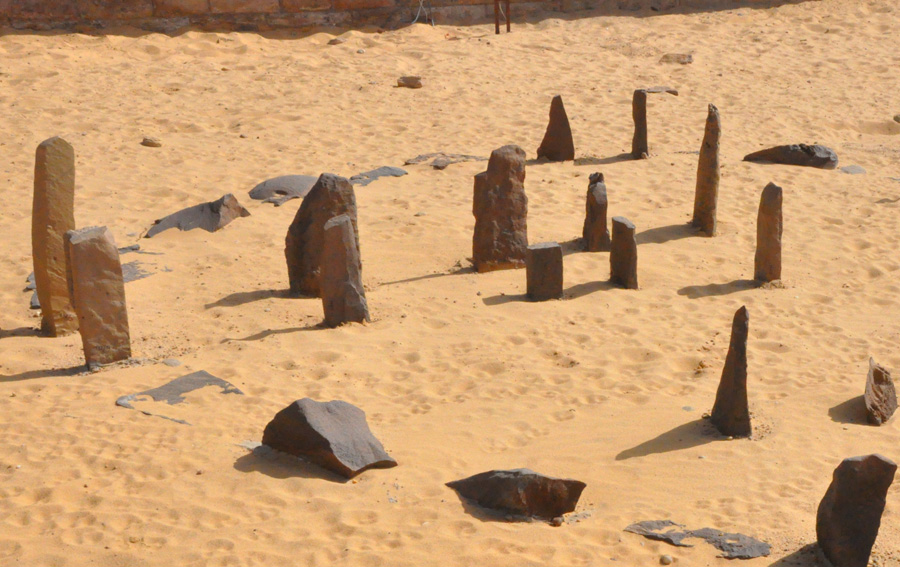
When Atlantis Rising Magazine published the “Astronomers of Nabta Playa,” by Mark H. Gaffney, in march of 2006, the idea that indigenous hunter gatherers in north Africa could have their eyes on the stars, was considered ‘controversial,’ to say the least. But like many such notions, our reporting has been vindicated by time. A recent study published in the prestigious peer-reviewed journal Nature, now echoes the astonishing assertions of our Atlantis Rising cover story. In fact, Discover Magazine now trumpets “The world’s first astronomical site was built in Africa and is older than stonehenge. This 7,000-year-old stone circle tracked the summer solstice and the arrival of the annual monsoon season. It’s the oldest known astronomical site on Earth.”

Another problem for mainstream science though, could be that, once again they seems to be late to the party. At least one astronomically aligned stone circle, dating to 11,500 years ago, can now be found in Gobekli Tepe in Turkey, where researchers have documented a connection with the constellation Cygnus X. Indeed, if the Nabta Playa experience is any guide, it may take a few years for that knowledge to seep into the system. In the meantime a reference to Atlantis Rising back issues might be helpful.

The stone circle of Nabta Playa, says the new research, charts the summer solstice, a time that coincided with the arrival of monsoon rains in the Sahara Desert thousands of years ago. “Here is human beings’ first attempt to make some serious connection with the heavens,” says J. McKim Malville, a professor emeritus at the University of Colorado and archaeoastronomy expert. That makes the North African site “the dawn of observational astronomy,” he adds. “What in the world did they think about it? Did they imagine these stars were gods? And what kinds of connections did they have with the stars and the stones?” he wonders.

Discovered in 1973 by much traveled explorer Fred Wendorf, Nabta Playa has been a problem for conventional archaeology from the beginning. Former NASA physicist Thomas Brophy took up the challenge and quietly pursued his own astronomical study. Brophy had already reviewed the limited data published in Nature in 1998, and after Wendorf’s more extensive data became available, his own developing theories fell into place. In 2002 Brophy published his findings in a book The Origin Map. Because available astronomy software at the time was inadequate, Brophy had to custom-engineer his own. He did it, though, and was able to track star movements at Nabta Playa over thousands of years and he succeeded in decoding the stone circle and nearby megaliths. Among many the startling revelations made by Brophy, the Nabta Playa builders demonstrated knowledge of not only solar, but galactic astronomy. Academics my snicker at that, but, developments, so far, do not appear to favor the suppositions of the mainstream.

The Astronomers of Nabta Playa
(AR #56, March/April 2006


Posted on

Turkey’s Underground Domain

Ancient Subterranean Cities Still Defy Explanation

In H.G. Wells Science fiction classic The Time Machine, an evil subterranean race in the future threatens the lives of innocent surface dwellers. But the possible powerful influence of underground worlds is not confined to the distant future. It may represent very important secrets of our ancient past.

The Greeks and Romans believed in Hades, the underworld of the dead. The Egyptians believed in an underworld called the Duat, and the Mayan underworld was Xibalba. In other parts of the world, people traditionally believed that fairies, elves, gnomes, and the like lived underground, often in hollowed-out hills, or in a kind of parallel universe that could be accessed through tunnels or caves.

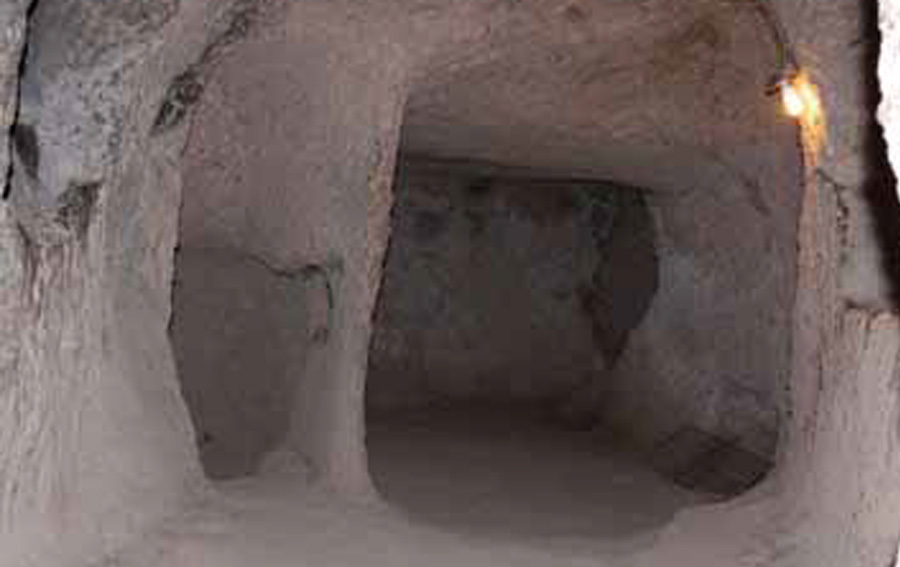
Officials in Turkey’s Cappadocia region now believe the exploration of vast and complex underground cities found in their region is going to lead to the rewriting of human history on Earth. Under intense investigation since their discovery in 2012, the astonishing sites have drawn the attention of archaeologists from around the world. So far, hundreds of underground cities have been reported in Turkey; but few have been adequately explored, and it seems likely that many more wait to be discovered. Recent digging has been under the guidance of archaeologist Semih Istanbulluoglu of Ankara University. In December, 2015, he told Turkey’s Hurriyet Daily News, that scientists believe the underground cities will date back to even before the Hittites in the second millennium BC, but said this remained to be confirmed by the laboratory work.

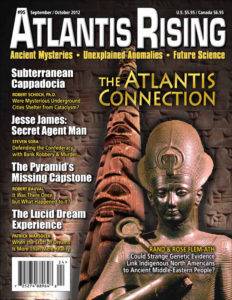
To this day nobody really knows the true extent of these or other underground cities of the area, but they are substantial. In “The Ancient Subterranean Shelters of Cappadocia.” (AR #95, September/October, 2012), Boston University geologist Robert Schoch, described two of the cities, “Kaymakli consists of at least eight floors or underground stories, each extending in a labyrinthine manner over a vast area. The city may have supported a population of 3,000 to 4,000 people plus farm animals and supplies, all housed underground.” Derinkuyu, Schoch continued, “with an estimated twenty floors and extending an estimated 85 meters (280 feet) below the surface may have supported anywhere from a few thousand to 10,000 people plus their livestock and goods. And the underground cities may not have been entirely isolated from one another. Kaymakli and Derinkuyu are less than a dozen kilometers (seven and a half miles) from each other and there are reports of a tunnel that may connect them.”

Cappadocia’s astonishing underground cities, Schoch believes, though probably occupied many times, were originally built around the end of the last ice age about twelve to thirteen thousand years ago.

“The thing that is important to know about the underground,” said Will Hunt, author of the recent book Underground: A Human History of the Worlds Beneath Our Feet (Random House, 2019), “is that we do not belong there. Biologically, physiologically, our bodies are just not designed for life underground.” Nevertheless, when things on the surface get really bad, where are you going to go?

The Ancient Subterranean Shelters of Cappadocia.”
(AR #95, September/October, 2012


Posted on

Pleistocene sediment DNA from Denisova Cave

Sediment DNA tracks 300,000 years of hominin and animal presence at Denisova Cave

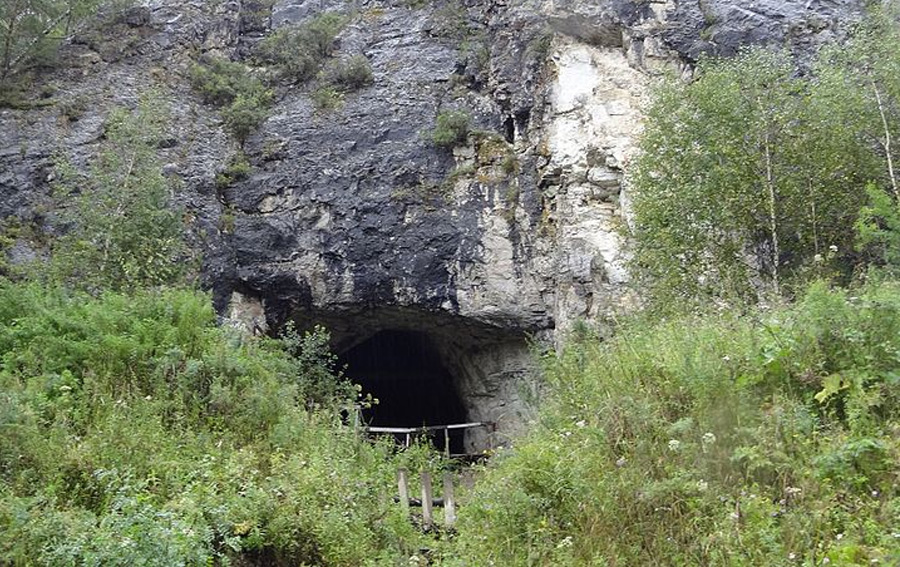
Max Planck researchers have analyzed DNA from 728 sediment samples from Denisova Cave. This is the largest study of DNA preserved in sediments to date. It provides unprecedented detail about the occupation of the site by both archaic and modern humans over 300,000 years. The researchers detected the DNA of Neandertals and Denisovans, the two forms of archaic hominins who inhabited the cave. They were also the first to detect DNA of modern humans at the site who appeared around the time of the emergence of an archaeological culture called the Initial Upper Palaeolithic around 45,000 years ago. The study also documents the history of many mammals, including bears and hyaenas that lived in the area through cold and warm periods.

Denisova Cave is located in the Altai Mountains in southern Siberia and is famous for the discovery of Denisovans, an extinct form of archaic humans that is thought to have occupied large parts of central and eastern Asia. Neandertal remains have also been found at the site, as well as a bone from a child who had a Neandertal mother and Denisovan father, showing that both groups met in the region. However, only eight bone fragments and teeth of Neandertals and Denisovans have been recovered so far from the deposits in Denisova Cave, which cover a time span of over 300,000 years. These are too few fossils to reconstruct the occupational history of the site in detail, or to link the different types of stone tools and other artefacts found in Denisova Cave to specific hominin groups. For example, the discovery of jewelry and pendants typical of the so-called Initial Upper Palaeolithic culture in approximately 45,000-year-old layers has prompted debates as to whether Denisovans, Neandertals or modern humans were the creators of these artefacts.

Michael Shunkov of the Siberian Branch of the Russian Academy of Sciences, who leads the excavations at Denisova Cave, assembled an interdisciplinary team of archaeologists, geneticists, geochronologists and other scientists to study this unique site. The team has now performed the largest analysis ever of sediment DNA from a single excavation site. “The analysis of sediment DNA provides a wonderful opportunity to combine the dates that we previously determined for the deposits in Denisova Cave with molecular evidence for the presence of people and fauna”, says Richard ‘Bert’ Roberts from the University of Wollongong in Australia. The team of geochronologists led by him and Zenobia Jacobs collected more than 700 sediment samples in a dense grid from the exposed sediment profiles in the cave. “Just collecting the samples from all three chambers in the cave, and documenting their precise locations, took us more than a week”, Jacobs says.

Traces of DNA in the sediment

When the samples arrived at the Max Planck Institute for Evolutionary Anthropology in Leipzig, Elena Zavala, the lead author of the study, spent another two years in the lab to extract and sequence small traces of ancient hominin and animal mitochondrial DNA from this huge collection of samples. “These efforts paid off and we detected the DNA of Denisovans, Neandertals or ancient modern humans in 175 of the samples”, Zavala says.

When matching the DNA profiles with the ages of the layers, the researchers found that the earliest hominin DNA belonged to Denisovans, indicating that they produced the oldest stone tools at the site between 250,000 and 170,000 years ago. The first Neandertals arrived towards the end of this time period, after which both Denisovans and Neandertals frequented the site – except between 130,000 and 100,000 years ago, when no Denisovan DNA was detected in the sediments. The Denisovans who came back after this time carried a different mitochondrial DNA, suggesting that a different population arrived in the region.

New tools

Modern human mitochondrial DNA first appears in the layers containing Initial Upper Palaeolithic tools and other objects, which are much more diverse than in the older layers. “This provides not only the first evidence of ancient modern humans at the site, but also suggests that they may have brought new technology into the region with them”, says Zavala.

The scientists studied animal DNA and identified two time periods where changes occurred in both animal and hominin populations. The first, around 190,000 years ago, coincided with a shift from relatively warm (interglacial) conditions to a relatively cold (glacial) climate, when hyaena and bear populations changed and Neandertals first appeared in the cave. The second major change occurred between 130,000 and 100,000 years ago, along with a shift in climate from relatively cold to relatively warm conditions. During this period, Denisovans were absent and animal populations changed again.

“I believe that our Russian colleagues who excavate this amazing site have set the standards for many future archaeological excavations with their careful collection of many samples from each archaeological layer for DNA analysis”, says Svante Pääbo who initiated the study with the Russian team. “Being able to generate such dense genetic data from an archaeological site is like a dream come true, and these are just the beginnings”, says Matthias Meyer, the senior author on the study. “There is so much information hidden in sediments – it will keep us and many other geneticists busy for a lifetime.”

Artificial Intelligence Identifies Unknown Human Ancestor
New Evidence from Denisova Cave
Atlantis Rising Online Sources
Atlantis Rising Magazine #135, May/June, 2019