Posted on

Comeback for Cold Fusion


Major Funding Provided by a US Government Agency

By Rahul Rao, Popular Science
https://www.popsci.com/science/cold-fusion-low-energy-nuclear-reaction/

This image has an empty alt attribute; its file name is ai-free.png

Earlier this year, ARPA-E, a US government agency dedicated to funding advanced energy research, announced a handful of grants for a field it calls “low-energy nuclear reactions,” or LENR. Most scientists likely didn’t take notice of the news. But, for a small group of them, the announcement marked vindication for their specialty: cold fusion.

Cold fusion, better known by its practitioners as LENR, is the science—or, perhaps, the art—of making atomic nuclei merge and, ideally, harnessing the resultant energy. All of this happens without the incredible temperatures, on the scale of millions of degrees, that you need for “traditional” fusion. In a dream world, successful cold fusion could provide us with a boundless supply of clean, easily attainable energy.

Tantalizing as it sounds, for the past 30 years, cold fusion has largely been a forgotten specter of one of science’s most notorious controversies, when a pair of chemists in 1989 claimed to achieve the feat—which no one else could replicate. There is still no generally accepted theory that supports cold fusion; many still doubt that it’s possible at all. But those physicists and engineers who work on LENR believe the new grants are a sign that their field is being taken seriously after decades in the wilderness.

“It got a bad start and a bad reputation,” believes David Nagel, an engineer at George Washington University, “and then, over the intervening years, the evidence has piled up.”

Igniting fusion involves pressing the hearts of atoms together, creating larger nuclei and a fountain of energy. This isn’t easy. The protons inside a nucleus give it a positive charge, and like-charged nuclei electrically repel each other. Physicists must force the atoms to crash together anyway. 

Normally, breaking this limit needs an immense amount of energy, which is why stars, where fusion happens naturally, and Earthbound experiments reach extreme heat. But what if there were another, lower-temperature way?

Scientists had been theorizing such methods since the early 20th century, and they’d found a few tedious, extremely inefficient ways. But in the 1980s, two chemists thought they’d made one method work to great success. 

The duo, Martin Fleischmann and Stanley Pons, had placed the precious metal palladium in a bath of heavy water: a form of H2O whose hydrogen atoms have an extra neutron, a form known as deuterium, commonly used in nuclear science. When Fleischmann and Pons switched on an electrical current through their apparatus and left it running, they began to see abrupt heat spikes, or so they claimed, and particles like neutrons.

Those heat spikes and particles, according to them, could not be explained by any chemical process. What could explain them were the heavy water’s deuterium nuclei fusing, just as they would in a star.
If Fleischmann and Pons were right, fusion could be achievable at room temperature in a relatively basic chemistry lab. If you think that sounds too good to be true, you’re far from alone. When the pair announced their results in 1989, what followed was one of the most spectacular firestorms in the history of modern science. Scientist after scientist tried to recreate their experiment, and no one could reliably replicate their results.

Pons and Fleischmann are remembered as fraudsters. It likely didn’t help that they were chemists trying to make a mark on a field dominated by physicists. Whatever they had seen, “cold fusion” found itself at respectable science’s margins. 

Still, in the shadows, LENR experiments continued. (Some researchers tried variations on Fleischmann and Pons’ themes. Others, especially in Japan, sought LENR as a means of cleaning up nuclear waste by transforming radioactive isotopes into less dangerous ones.) A few experiments showed oddities such as excess heat or alpha particles—anomalies that might best be explained if atomic nuclei were reacting behind the scenes.

“The LENR field has somehow, miraculously, due to the convictions of all these people involved, has stayed alive and has been chugging along for 30 years,” says Jonah Messinger, an analyst at the Breakthrough Institute think tank and a graduate student at MIT.

Fleischmann and Pons’ fatal flaw—that their results could not be replicated—continues to cast a pall over the field. Even some later experiments that seemed to show success could not be replicated. But this does not deter LENR’s current proponents. “Science has a reproducibility problem all the time,” says Florian Metzler, a nuclear scientist at MIT.

In the absence of a large official push, the private sector had provided much of LENR’s backing. In the late 2010s, for instance, Google poured several million dollars into cold fusion research to limited success. But government funding agencies are now starting to pay attention. The ARPA-E program joins European Union projects, HERMES and CleanHME, which both kicked off in 2020. (Messinger and Metzler are members of an MIT team that will receive ARPA-E grant funds.)

By the standards of other energy research funding, none of the grants are particularly eye-watering. The European Union programs and ARPA-E total up to around $10 million each: a pittance compared to the more than $1 billion the US government plans to spend in 2023 on mainstream fusion.
But that money will be used in important ways, its proponents say. The field has two pressing priorities. One is to attract attention with a high-quality research paper that clearly demonstrates an anomaly, ideally published in a reputable journal like Nature or Science. “Then, I think, there will be a big influx of resources and people,” says Metzler.

A second, longer-term goal is to explain how cold fusion might work. The laws of physics, as scientists understand them today, do not have a consensus answer for why cold fusion could happen at all.
Metzler doesn’t see that open question as a problem. “Sometimes people have made these arguments: ‘Oh, cold fusion contradicts established physics,’ or something like that,” he says. But he believes there are many unanswered questions in nuclear physics, especially with larger atoms. “We have an enormous amount of ignorance when it comes to nuclear systems,” he says.

Yet answers would have major benefits, other experts argue. “As long as it’s not understood, a lot of people in the scientific community are put off,” says Nagel. “They’re not willing to pay any attention to it.”

It is, of course, entirely possible that cold fusion is an illusion. If that’s the case, then ARPA-E’s grants may give researchers more proof that nothing is there. But it’s also possible that something is at work behind the scenes.

And, LENR proponents say, the Fleischmann and Pons saga is now fading as younger researchers enter the field with no memory of 1989. Perhaps that will finally be what lets LENR emerge from the pair’s shadow.“If there is a nuclear anomaly that occurs,” says Messinger, “my hope is that the wider physics community is ready to listen.”

AR #80

Big Science on Trial

by Martin Ruggles
Posted on

Fusion Energy Breakthrough

The U.S. Department of Energy (DOE) and DOE’s National Nuclear Security Administration (NNSA) today announced the achievement of fusion ignition at Lawrence Livermore National Laboratory (LLNL) — a major scientific breakthrough decades in the making that will pave the way for advancements in national defense and the future of clean power. On Dec. 5, a team at LLNL’s National Ignition Facility (NIF) conducted the first controlled fusion experiment in history to reach this milestone, also known as scientific energy breakeven, meaning it produced more energy from fusion than the laser energy used to drive it. This first-of-its-kind feat will provide unprecedented capability to support NNSA’s Stockpile Stewardship Program and will provide invaluable insights into the prospects of clean fusion energy, which would be a game-changer for efforts to achieve President Biden’s goal of a net-zero carbon economy.

“This is a landmark achievement for the researchers and staff at the National Ignition Facility who have dedicated their careers to seeing fusion ignition become a reality, and this milestone will undoubtedly spark even more discovery,” said U.S. Secretary of Energy Jennifer M. Granholm. “The Biden-Harris Administration is committed to supporting our world-class scientists — like the team at NIF — whose work will help us solve humanity’s most complex and pressing problems, like providing clean power to combat climate change and maintaining a nuclear deterrent without nuclear testing.”

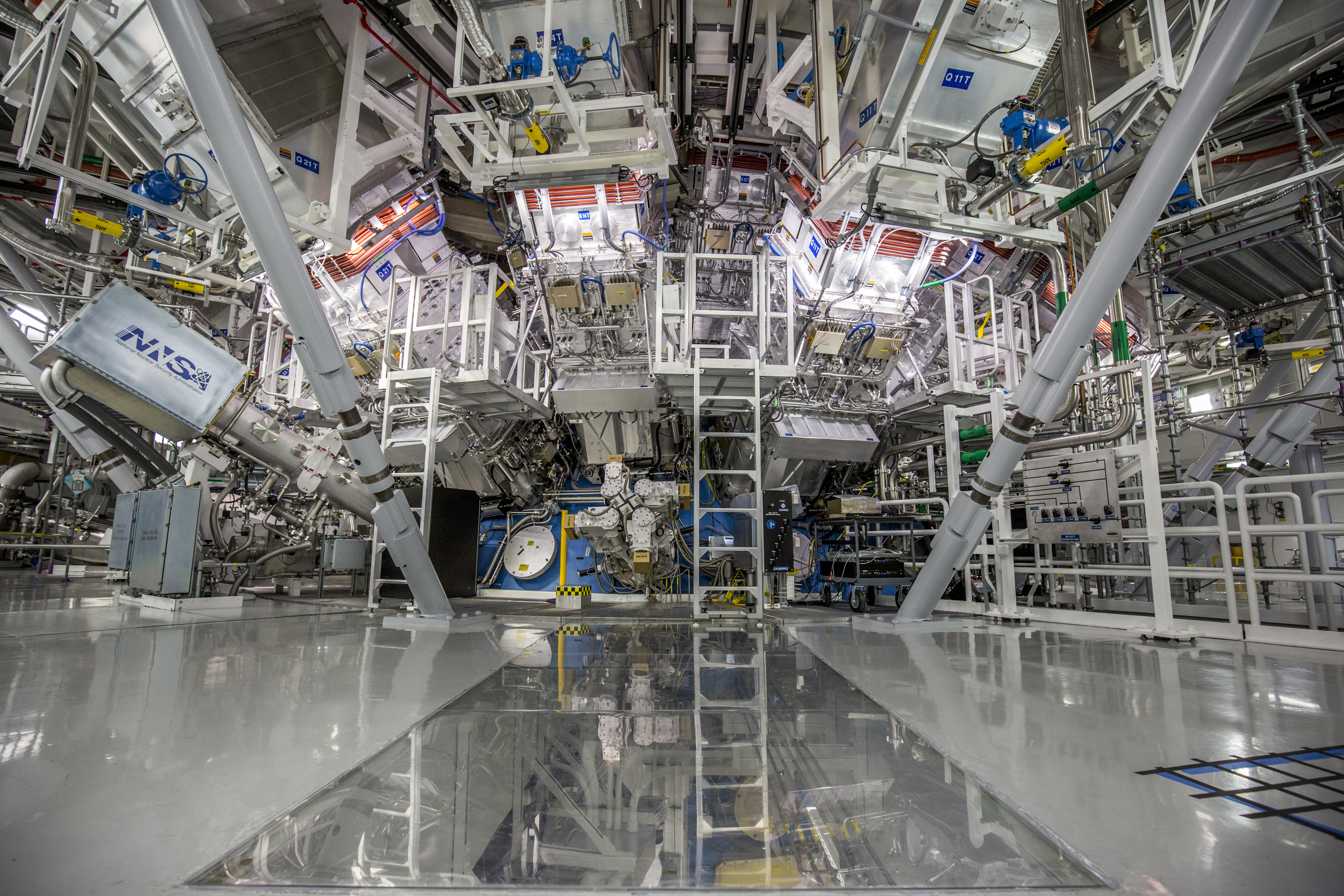
target chamber 121322
The target chamber of LLNL’s National Ignition Facility, where 192 laser beams delivered more than 2 million joules of ultraviolet energy to a tiny fuel pellet to create fusion ignition on Dec. 5, 2022.

“We have had a theoretical understanding of fusion for over a century, but the journey from knowing to doing can be long and arduous. Today’s milestone shows what we can do with perseverance,” said Dr. Arati Prabhakar, the President’s chief adviser for Science and Technology and director of the White House Office of Science and Technology Policy.

“Monday, December 5, 2022, was a historic day in science thanks to the incredible people at Livermore Lab and the National Ignition Facility. In making this breakthrough, they have opened a new chapter in NNSA’s Stockpile Stewardship Program,” NNSA Administrator Jill Hruby said. “I would like to thank the members of Congress who have supported the National Ignition Facility because their belief in the promise of visionary science has been critical for our mission. Our team from around the DOE national laboratories and our international partners have shown us the power of collaboration.”

“The pursuit of fusion ignition in the laboratory is one of the most significant scientific challenges ever tackled by humanity, and achieving it is a triumph of science, engineering, and most of all, people,” LLNL Director Dr. Kim Budil said. “Crossing this threshold is the vision that has driven 60 years of dedicated pursuit — a continual process of learning, building, expanding knowledge and capability, and then finding ways to overcome the new challenges that emerged. These are the problems that the U.S. national laboratories were created to solve.”

“This astonishing scientific advance puts us on the precipice of a future no longer reliant on fossil fuels but instead powered by new clean fusion energy,” U.S. Senate Majority Leader Charles Schumer (NY) said. “I commend Lawrence Livermore National Labs and its partners in our nation’s Inertial Confinement Fusion (ICF) program, including the University of Rochester’s Lab for Laser Energetics in New York, for achieving this breakthrough. Making this future clean energy world a reality will require our physicists, innovative workers and brightest minds at our DOE-funded institutions, including the Rochester Laser Lab, to double down on their cutting-edge work. That’s why I’m also proud to announce today that I’ve helped to secure the highest-ever authorization of over $624 million this year in the National Defense Authorization Act for the ICF program to build on this amazing breakthrough.”

“After more than a decade of scientific and technical innovation, I congratulate the team at Lawrence Livermore National Laboratory and the National Ignition Facility for their historic accomplishment,” said U.S. Senator Dianne Feinstein (CA). “This is an exciting step in fusion and everyone at Lawrence Livermore and NIF should be proud of this milestone achievement.”

“This is an historic, innovative achievement that builds on the contributions of generations of Livermore scientists. Today, our nation stands on their collective shoulders. We still have a long way to go, but this is a critical step and I commend the U.S. Department of Energy and all who contributed toward this promising breakthrough, which could help fuel a brighter clean energy future for the United States and humanity,” said U.S. Senator Jack Reed (RI), the chairman of the Senate Armed Services Committee.

“This monumental scientific breakthrough is a milestone for the future of clean energy,” said U.S. Senator Alex Padilla (CA). “While there is more work ahead to harness the potential of fusion energy, I am proud that California scientists continue to lead the way in developing clean energy technologies. I congratulate the scientists at Lawrence Livermore National Laboratory for their dedication to a clean energy future, and I am committed to ensuring they have all of the tools and funding they need to continue this important work.”

“This is a very big deal. We can celebrate another performance record by the National Ignition Facility. This latest achievement is particularly remarkable because NIF used a less spherically symmetrical target than in the August 2021 experiment,” said U.S. Representative Zoe Lofgren (CA-19). “This significant advancement showcases the future possibilities for the commercialization of fusion energy. Congress and the Administration need to fully fund and properly implement the fusion research provisions in the recent CHIPS and Science Act and likely more. During World War II, we crafted the Manhattan Project for a timely result. The challenges facing the world today are even greater than at that time. We must double down and accelerate the research to explore new pathways for the clean, limitless energy that fusion promises.”

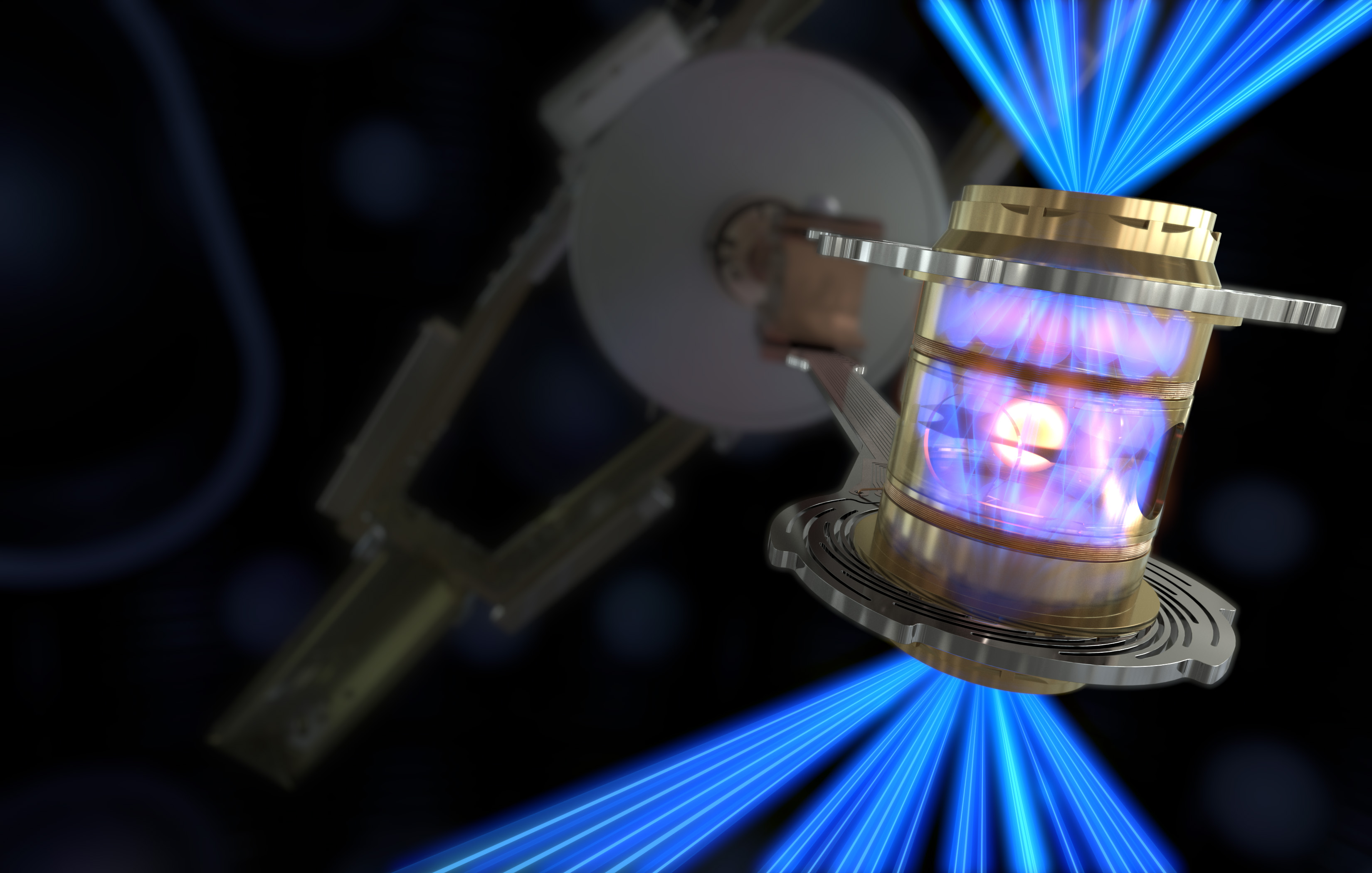
hohlraum 121322
The hohlraum that houses the type of cryogenic target used to achieve ignition on Dec. 5, 2022, at LLNL’s National Ignition Facility.

“I am thrilled that NIF — the United States’ most cutting-edge nuclear research facility — has achieved fusion ignition, potentially providing for a new clean and sustainable energy source in the future. This breakthrough will ensure the safety and reliability of our nuclear stockpile, open new frontiers in science, and enable progress toward new ways to power our homes and offices in future decades,” said U.S. Representative Eric Swalwell (CA-15). “I commend the scientists and researchers for their hard work and dedication that led to this monumental scientific achievement, and I will continue to push for robust funding for NIF to support advancements in fusion research.”

LLNL’s experiment surpassed the fusion threshold by delivering 2.05 megajoules (MJ) of energy to the target, resulting in 3.15 MJ of fusion energy output, demonstrating for the first time a most fundamental science basis for inertial fusion energy (IFE). Many advanced science and technology developments are still needed to achieve simple, affordable IFE to power homes and businesses, and DOE is currently restarting a broad-based, coordinated IFE program in the United States. Combined with private-sector investment, there is a lot of momentum to drive rapid progress toward fusion commercialization.

Fusion is the process by which two light nuclei combine to form a single heavier nucleus, releasing a large amount of energy. In the 1960s, a group of pioneering scientists at LLNL hypothesized that lasers could be used to induce fusion in a laboratory setting. Led by physicist John Nuckolls, who later served as LLNL director from 1988 to 1994, this revolutionary idea became inertial confinement fusion, kicking off more than 60 years of research and development in lasers, optics, diagnostics, target fabrication, computer modeling and simulation and experimental design.

To pursue this concept, LLNL built a series of increasingly powerful laser systems, leading to the creation of NIF, the world’s largest and most energetic laser system. NIF — located at LLNL in Livermore, California — is the size of a sports stadium and uses powerful laser beams to create temperatures and pressures like those in the cores of stars and giant planets, and inside exploding nuclear weapons.

X-rays 121322
To create fusion ignition, the National Ignition Facility’s laser energy is converted into X-rays inside the hohlraum, which then compress a fuel capsule until it implodes, creating a high temperature, high pressure plasma.

Achieving ignition was made possible by dedication from LLNL employees as well as countless collaborators at DOE’s Los Alamos National Laboratory, Sandia National Laboratories and Nevada National Security Site; General Atomics; academic institutions, including the University of Rochester’s Laboratory for Laser Energetics, the Massachusetts Institute of Technology, the University of California, Berkeley, and Princeton University; international partners, including the United Kingdom’s Atomic Weapons Establishment and the French Alternative Energies and Atomic Energy Commission; and stakeholders at DOE and NNSA and in Congress.

AR #64

Power from the Nightside

by Susan Martinez

Posted on

Fusion Energy: New Approach Opens the Door?

Scientists at the U.S. Department of Energy’s (DOE) Princeton Plasma Physics Laboratory (PPPL) have uncovered critical new details about fusion facilities that use lasers to compress the fuel that produces fusion energy. The new data could help lead to the improved design of future laser facilities that harness the fusion process that drives the sun and stars.

Fusion combines light elements in the form of plasma — the hot, charged state of matter composed of free electrons and atomic nuclei — that generates massive amounts of energy. Scientists are seeking to replicate fusion on Earth for a virtually inexhaustible supply of power to generate electricity.

Major experimental facilities include tokamaks, the magnetic fusion devices that PPPL studies; stellarators, the magnetic fusion machines that PPPL also studies and have recently become more widespread around the world; and laser devices used in what are called inertial confinement experiments.

The researchers explored the impact of adding tungsten metal, which is used to make cutting tools and lamp filaments, to the outer layer of plasma fuel pellets in inertial confinement research. They found that tungsten boosts the performance of the implosions that cause fusion reactions in the pellets. The tungsten helps block heat that would prematurely raise the temperature at the center of the pellet.

The research team confirmed the findings by making measurements using krypton gas, sometimes used in fluorescent lamps. Once added to the fuel, the gas emitted high-energy light known as X-rays that was captured by an instrument called a high-resolution X-ray spectrometer. The X-rays conveyed clues about what was happening inside the capsule.  
“I was excited to see that we could make these unprecedented measurements using the technique we have been developing these past few years. This information helps us evaluate the pellet’s implosion and helps researchers calibrate their computer simulations,” said PPPL physicist Lan Gao, lead author of the paper reporting the results in Physical Review Letters. “Better simulations and theoretical understanding in general can help researchers design better future experiments.”

The scientists performed the experiments at the National Ignition Facility (NIF), a DOE user facility at Lawrence Livermore National Laboratory. The facility shines 192 lasers onto a gold cylinder, or hohlraum, that is one centimeter tall and encases the fuel. The laser beams heat the hohlraum, which radiates X-rays evenly onto the fuel pellet within.

https://www.pppl.gov/news/2022/uncovering-novel-way-bring-earth-energy-powers-sun-and-stars


AR #82

New Energy Scientists Get New Respect

by Jeanne Manning