Posted on

Researchers Say they Know How the Universe Began

This image has an empty alt attribute; its file name is ai-free.png

A team of researchers has analyzed more than one million galaxies to explore the origin of the present-day cosmic structures, reports a recent study published in Physical Review D.
Until today, precise observations and analyses of the cosmic microwave background (CMB) and large-scale structure (LSS) have led to the establishment of the standard framework of the universe, the so-called ΛCDM model, where cold dark matter (CDM) and dark energy (the cosmological constant, Λ) are significant characteristics.
This model suggests that primordial fluctuations were generated at the beginning of the universe, or in the early universe, which acted as triggers, leading to the creation of all things in the universe including stars, galaxies, galaxy clusters, and their spatial distribution throughout space. Although they are very small when generated, fluctuations grow with time due to the gravitational pulling force, eventually forming a dense region of dark matter, or a halo. Then, different halos repeatedly collided and merged with one another, leading to the formation of celestial objects such as galaxies (https://journals.aps.org/prd/abstract/10.1103/PhysRevD.108.083533).
The researchers simultaneously analyzed the spatial distribution and shape pattern of approximately one million galaxies from the Sloan Digital Sky Survey (SDSS), the world’s largest survey of galaxies today.
As a result, they successfully constrained statistical properties of the primordial fluctuations that seeded the formation of the structure of the entire universe. A statistically significant alignment of the orientations of two galaxies’ shapes more than 100 million light years apart. Their result showed correlations exist between distant galaxies whose formation processes are apparently independent and causally unrelated.
The methods and results of this study will allow researchers in the future to further test inflation theory. Details of this study were published on October 31 in Physical Review D as an Editors’ Suggestion.

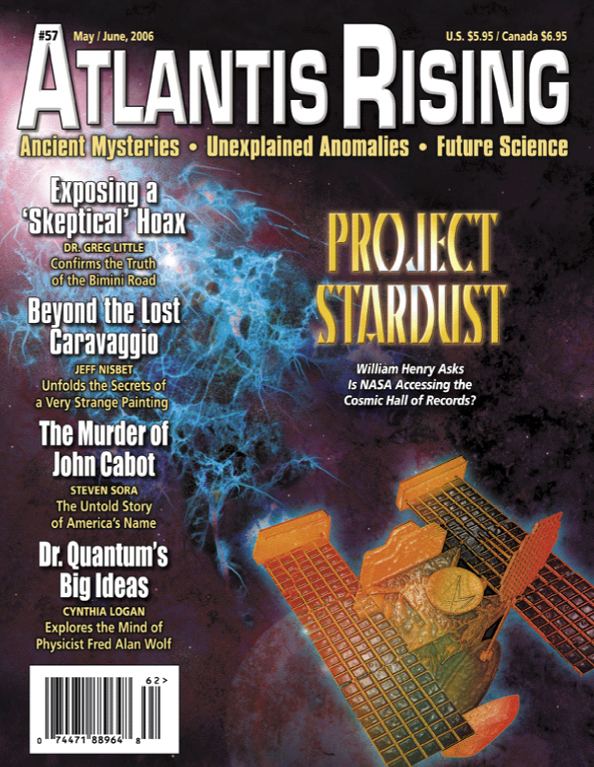
AR #75

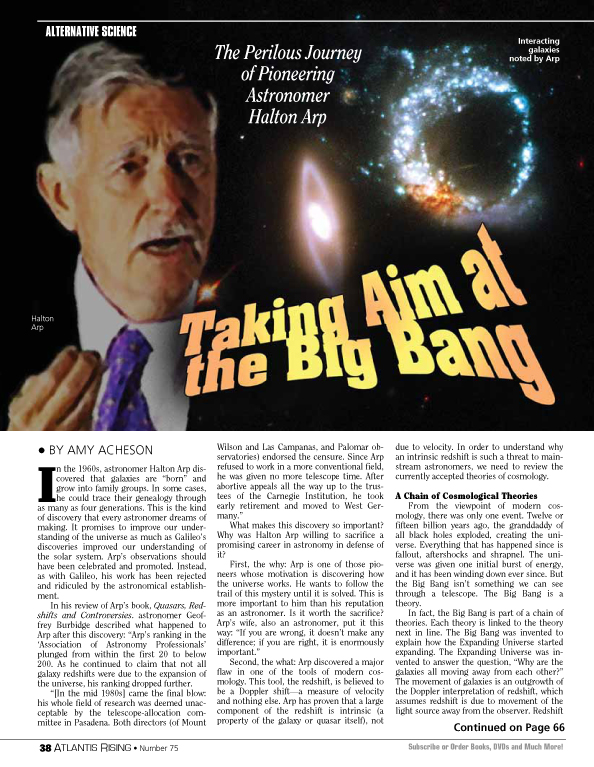
Taking Aim at the Big Bang
Posted on

Astronomers find abundance of Milky Way-like galaxies

This image has an empty alt attribute; its file name is ai-free.png

Galaxies from the early Universe are more like our own Milky Way than previously thought, flipping the entire narrative of how scientists think about structure formation in the Universe, according to new research published today.

Using the James Webb Space Telescope (JWST), an international team of researchers including those at The University of Manchester and University of Victoria in Canada discovered that galaxies like our own Milky Way dominate throughout the universe and are surprisingly common.

These galaxies go far back in the Universe’s history with many of these galaxies forming 10 billion years ago or longer.
The Milky Way is a typical ‘disk’ galaxy, which a shape similar to a pancake or compact disk, rotating about its centre and often containing spiral arms.  These galaxies are thought to be the most common in the nearby Universe and might be the types of galaxies where life can develop given the nature of their formation history. 

However, astronomers previously considered that these types of galaxies were too fragile to exist in the early Universe when galaxy mergers were more common, destroying what we thought was their delicate shapes.

The new discovery, published today in the Astrophysical Journal, finds that these ‘disk’ galaxies are ten times more common than what astronomers believed based on previous observations with the Hubble Space Telescope.

Christopher Conselice, Professor of Extragalactic Astronomy at The University of Manchester, said: “Using the Hubble Space Telescope we thought that disk galaxies were almost non-existent until the Universe was about six billion years old, these new JWST results push the time these Milky Way-like galaxies form to almost the beginning of the Universe.”
The research completely overturns the existing understanding of how scientists think our Universe evolves, and the scientists say new ideas need to be considered.

Lead author, Leonardo Ferreira from the University of Victoria, said: “For over 30 years it was thought that these disk galaxies were rare in the early Universe due to the common violent encounters that galaxies undergo. The fact that JWST finds so many is another sign of the power of this instrument and that the structures of galaxies form earlier in the Universe, much earlier in fact, than anyone had anticipated. 

It was once thought that disk galaxies such as the Milky Way were relatively rare through cosmic history, and that they only formed after the Universe was already middle aged. 

“Based on our results astronomers must rethink our understanding of the formation of the first galaxies and how galaxy evolution occurred over the past 10 billion years.”
 
 
Professor Christopher Conselice

Previously, astronomers using the Hubble Space Telescope believed that galaxies had mostly irregular and peculiar structures that resemble mergers.  However, the superior abilities of JWST now allows us to see the true structure of these galaxies for the first time. 
The researchers say that this is yet another sign that ‘structure’ in the Universe forms much quicker than anyone had anticipated.

Professor Conselice continues: “These JWST results show that disk galaxies like our own Milky Way, are the most common type of galaxy in the Universe. This implies that most stars exist and form within these galaxies which is changing our complete understanding of how galaxy formation occurs. These results also suggest important questions about dark matter in the early Universe which we know very little about.”
“Based on our results astronomers must rethink our understanding of the formation of the first galaxies and how galaxy evolution occurred over the past 10 billion years.”

AR #57

Project Stardust
by William Henry