Posted on

Radiocarbon Dating Works Half the Time

By Eran Elhaik, The Conversation

Dating is everything in archaeology. Exciting discoveries of ancient burial sites or jewelry might make headlines, but for scientists, this kind of discovery is only meaningful if we can tell how old the artifacts are.

So when chemist Willard Libby developed radiocarbon dating in 1946, it was a breakthrough for archaeology and he was awarded a Nobel prize for his achievement.


Nowadays people take radiocarbon technology for granted and many people think you can use radiocarbon on any human remains. Scientists wish that was true, but in reality, only 50% of corpses can be dated using this method because in some skeletons there isn’t enough organic material or it is contaminated.


Many exciting finds have been inaccurately dated or not dated at all, meaning the skeletons’ clues from the past are still locked away. But my team may have found the key: DNA dating.


To understand why we need DNA dating, you need to know what radiocarbon dating is. It allows us to date organic material (that is younger than 50,000 years) based on the chemical reactions that the body exchanges with the environment after death.


Carbon is found in all living things and is the backbone of all molecules. We absorb it when we eat food and exhale it into the atmosphere. Radiocarbon dating compares the three different isotopes (a type of atom) of carbon.
The most abundant, carbon-12, remains stable in the atmosphere. It’s a good yardstick to measure the age of skeletons as one of the other isotopes, carbon-14 is radioactive and decays over time.


Since animals and plants stop absorbing carbon-14 when they decay, the radioactivity of the carbon-14 that’s left behind reveals their age. But there’s a catch. Low amounts of organic material, the diet of the dead person or animal, and contamination with modern samples can skew the calculation.


Variation in dating between labs alone can be up to 1,000 years. It is like dating Queen Elizabeth II to William the Conqueror’s time.


The alternative to radiocarbon dating is using archaeological artifacts found alongside human remains. This works if we find a skeleton carrying a coin minted by Julius Caesar, say. But that rarely happens.


The earliest human remains in Afghanistan were found in the Darra-i-Kur cave in Badakhshan. The Darra-i-Kur cave in Afghanistan, for example, was initially assumed to be from the Paleolitihc era (30,000 years before the present), based on radiocarbon dating of charcoal and soil samples. But a later study measured skull fragments found in the cave against modern human skulls and realized it was closer to modern human form than Neanderthal. The skull fragment was radiocarbon dated to the Neolithic, some 25,000 years later. The mistake was due to inadequate carbon samples. It was the first ancient human from Afghanistan to have their DNA sequenced.


Scientists already know of DNA mutations that can show where someone was from. My team created a “GPS” tool for genomes that helped us to identify Ancient Ashkenaz as the birthplace of Ashkenazi Jews and the Yiddish language. There are also DNA mutations that help tell us how long ago someone lived.


One example is the LCT gene mutation that allowed our ancestors to process lactose. It has increased rapidly since it first emerged developed in the Neolithic era (10,000–8,000 BC). So we can date ancient genomes without the LCT gene mutation to before the Neolithic era.


My team developed the temporal population structure (TPS) algorithm tool and used it to date 5,000 ancient and modern genomes. There are tens of thousands of mutations that increased or decreased over time. TPS identifies these mutations and the period they are associated with and classifies them into eight broad periods.


Each ancient person is represented by the signatures of these periods. TPS uses a type of artificial intelligence known as supervised machine learning to match those signatures to the ages of skeletons.


One way to test a dating method is to compare the age gap of skeletons that are related to each other. This can work well if the skeletons are complete enough to estimate their age. You would expect father and son skeletons, for example, to be dated to a period of about 17 to 35 years apart.


In a blind test, the TPS dated the skeletons of close family members within a sensible time span of 17 years apart, compared with 68 years in a non-blind test for other dating methods. (A blind test is when information that can influence the experimenters is withheld until the experiment is complete.)


One of the most controversial sites for ancient dating is the Czechia Brandýsek burial site. The Brandýsek burials dated to the Bell Beaker period were explored between 1955 and 1956.


Archaeologists uncovered graves, half of which were destroyed by mining operations. They found 23 people from 22 graves alongside artifacts such as pottery, a bone pendant and flint arrowheads.


Based on both radiocarbon and archaeological context, the site was dated to the Bell Beaker period (4,800–3,800 years ago). However, the same study radiocarbon dated one of the skeletons to around (5,500 years ago).


Given that only two corpses could be radiocarbon dated, it was difficult to tell whether the dating was wrong or if this was a site that may have had ritualistic importance for thousands of years. Our DNA study of 12 skeletons from the site confirmed the questionable skeleton was about 1,000 years older than the others.


Our results confirm that this site has been a burial ground since the Neolithic period. This also explains why the site has architectural features not usually associated with Bell Beaker burials, like stone graves.


While TPS performed well, it is not a substitute for radiocarbon dating. Its accuracy depends on a dataset of ancient DNA. TPS can set dates for human and farm animals, for which extensive ancient data is available. But those who want to travel to the past to meet an ancient elephant or a monkey are on their own.

https://en.wikipedia.org/wiki/Radiocarbon_dating

AR Issue #131
Carbon Dating Challenged
Posted on

Reverses Signs of Aging In Mice

Age may be just a number, but it’s a number that often carries unwanted side effects, from brittle bones and weaker muscles to increased risks of cardiovascular disease and cancer. Now, scientists at the Salk Institute, in collaboration with Genentech, a member of the Roche group, have shown that they can safely and effectively reverse the aging process in middle-aged and elderly mice by partially resetting their cells to more youthful states.

As organisms age, it is not just their outward appearances and health that change; every cell in their bodies carries a molecular clock that records the passage of time. Cells isolated from older people or animals have different patterns of chemicals along their DNA—called epigenetic markers—compared to younger people or animals. Scientists know that adding a mixture of four reprogramming molecules—Oct4, Sox2, Klf4 and cMyc, also known as “Yamanaka factors”—to cells can reset these epigenetic marks to their original patterns. This approach is how researchers can dial back adult cells, developmentally speaking, into stem cells.

In 2016, Izpisua Belmonte’s lab reported for the first time that they could use the Yamanaka factors to counter the signs of aging and increase life span in mice with a premature aging disease. More recently, the team found that, even in young mice, the Yamanaka factors can accelerate muscle regeneration. Following these initial observations, other scientists have used the same approach to improve the function of other tissues like the heart, brain and optic nerve, which is involved in vision.

In the new study, Izpisua Belmonte and his colleagues tested variations of the cellular rejuvenation approach in healthy animals as they aged. One group of mice received regular doses of the Yamanaka factors from the time they were 15 months old until 22 months, approximately equivalent to age 50 through 70 in humans. Another group was treated from 12 through 22 months, approximately age 35 to 70 in humans. And a third group was treated for just one month at age 25 months, similar to age 80 in humans.

“What we really wanted to establish was that using this approach for a longer time span is safe,” says Pradeep Reddy, a Salk staff scientist and co-first author of the new paper. “Indeed, we did not see any negative effects on the health, behavior or body weight of these animals.”

Compared to control animals, there were no blood cell alterations or neurological changes in the mice that had received the Yamanaka factors. Moreover, the team found no cancers in any of the groups of animals.

AR #74
The Age of a Sage

Posted on

Dawn of Humanity Pushed Back 30,000 Years

The age of the oldest fossils in eastern Africa widely recognised as representing our species, Homo sapiens, has long been uncertain. Now, dating of a massive volcanic eruption in Ethiopia reveals they are much older than previously thought.

The remains – known as Omo I – were found in Ethiopia in the late 1960s, and scientists have been attempting to date them precisely ever since, by using the chemical fingerprints of volcanic ash layers found above and below the sediments in which the fossils were found.

An international team of scientists, led by the University of Cambridge, has reassessed the age of the Omo I remains – and Homo sapiens as a species. Earlier attempts to date the fossils suggested they were less than 200,000 years old, but the new research shows they must be older than a colossal volcanic eruption that took place 230,000 years ago. The results are reported in the journal Nature.

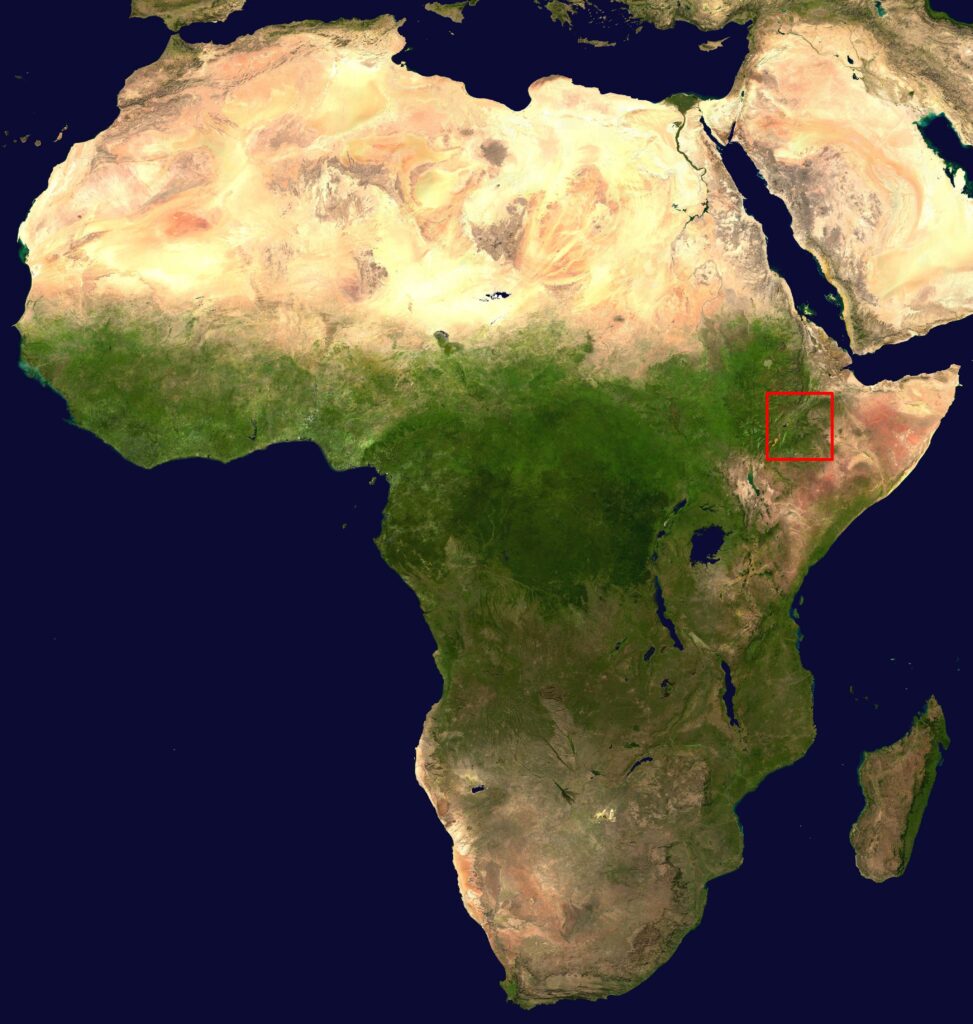
Approximate location of the Omo Kibish Formation marked in red. Image: NASA.

The Omo I remains were found in the Omo Kibish Formation in southwestern Ethiopia, within the East African Rift valley. The region is an area of high volcanic activity, and a rich source of early human remains and artefacts such as stone tools. By dating the layers of volcanic ash above and below where archaeological and fossil materials are found, scientists identified Omo I as the earliest evidence of our species, Homo sapiens.

“Using these methods, the generally accepted age of the Omo fossils is under 200,000 years, but there’s been a lot of uncertainty around this date,” said Dr Céline Vidal from Cambridge’s Department of Geography, the paper’s lead author. “The fossils were found in a sequence, below a thick layer of volcanic ash that nobody had managed to date with radiometric techniques because the ash is too fine-grained.”

As part of a four-year project led by Professor Clive Oppenheimer, Vidal and her colleagues have been attempting to date all the major volcanic eruptions in the Ethiopian Rift around the time of the emergence of Homo sapiens, a period known as the late Middle Pleistocene.

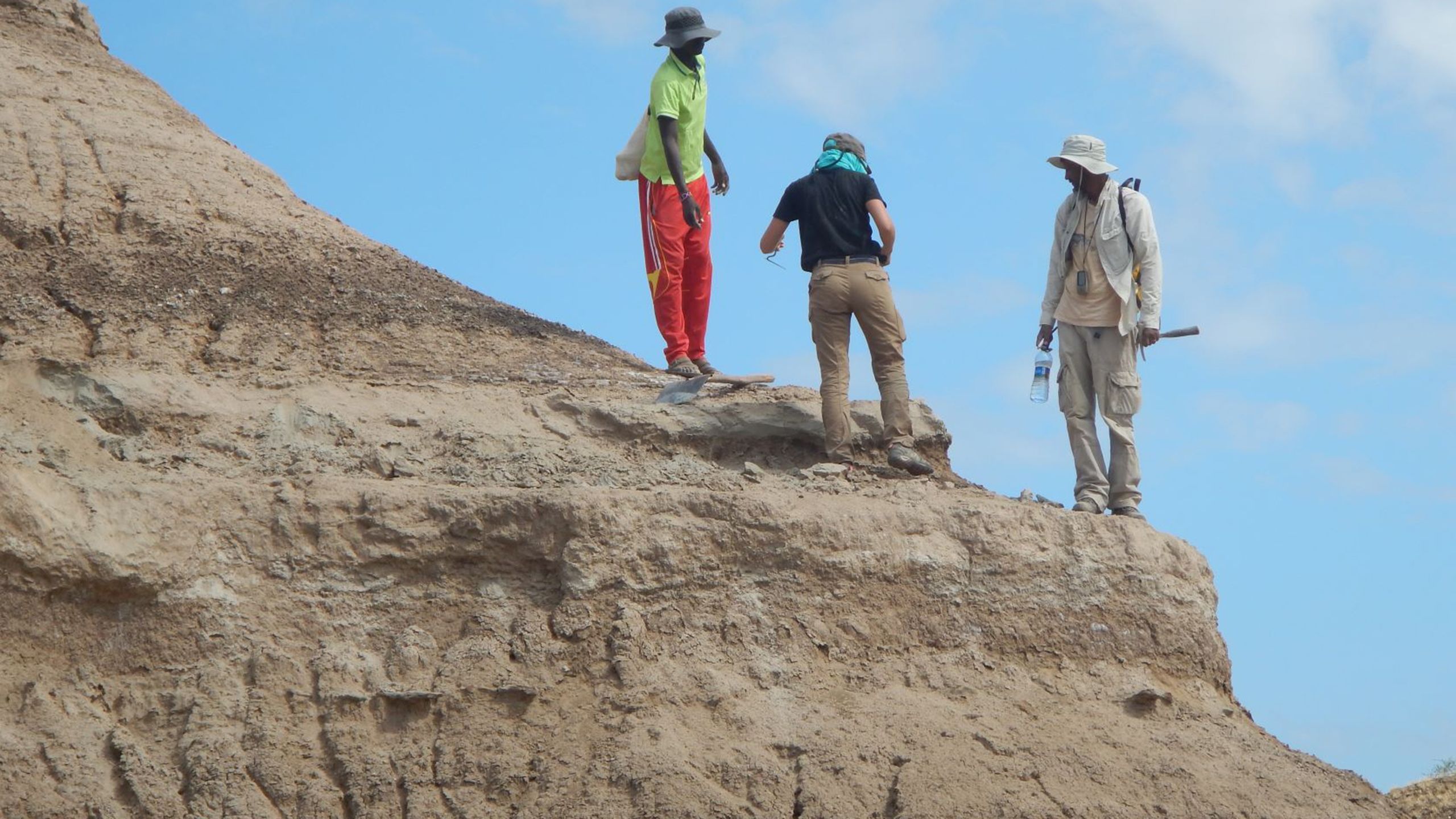
Researchers at the Omo Kibish geological formation in southwestern Ethiopia

Researchers at the Omo Kibish geological formation in southwestern Ethiopia. Credit: Al Deino 

The researchers collected pumice rock samples from the volcanic deposits and ground them down to sub-millimetre size. “Each eruption has its own fingerprint – its own evolutionary story below the surface, which is determined by the pathway the magma followed,” said Vidal. “Once you’ve crushed the rock, you free the minerals within, and then you can date them, and identify the chemical signature of the volcanic glass that holds the minerals together.”

The researchers carried out new geochemical analysis to link the fingerprint of the thick volcanic ash layer from the Kamoya Hominin Site (KHS) with an eruption of Shala volcano, more than 400 kilometres away. The team then dated pumice samples from the volcano to 230,000 years ago. Since the Omo I fossils were found deeper than this particular ash layer, they must be more than 230,000 years old.

“First I found there was a geochemical match, but we didn’t have the age of the Shala eruption,” said Vidal. The samples were sent to co-authors Dr Dan Barfod and Professor Darren Mark at the Scottish Universities Environmental Research Centre (SUERC) in Glasgow so they could measure the age of the rocks.

“When I received the results and found out that the oldest Homo sapiens from the region was older than previously assumed, I was really excited,” said Vidal.

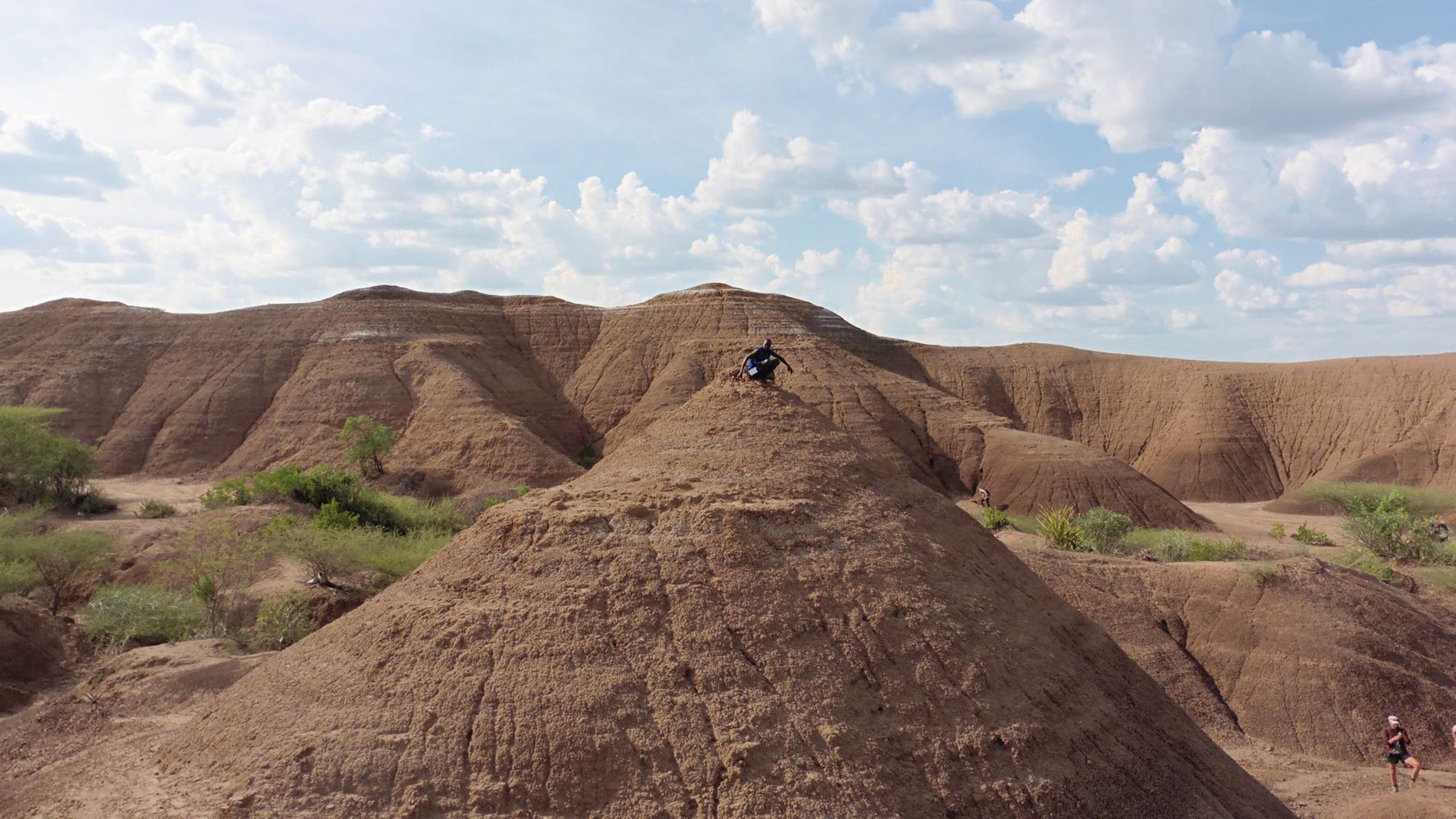
Omo Kibish Formation in southwestern Ethiopia.

Omo Kibish Formation in southwestern Ethiopia. Credit: Céline Vidal.

“The Omo Kibish Formation is an extensive sedimentary deposit which has been barely accessed and investigated in the past,” said co-author and co-leader of the field investigation Professor Asfawossen Asrat from Addis Ababa University in Ethiopia, who is currently based at BIUST in Botswana. “Our closer look into the stratigraphy of the Omo Kibish Formation, particularly the ash layers, allowed us to push the age of the oldest Homo sapiens in the region to at least 230,000 years.”

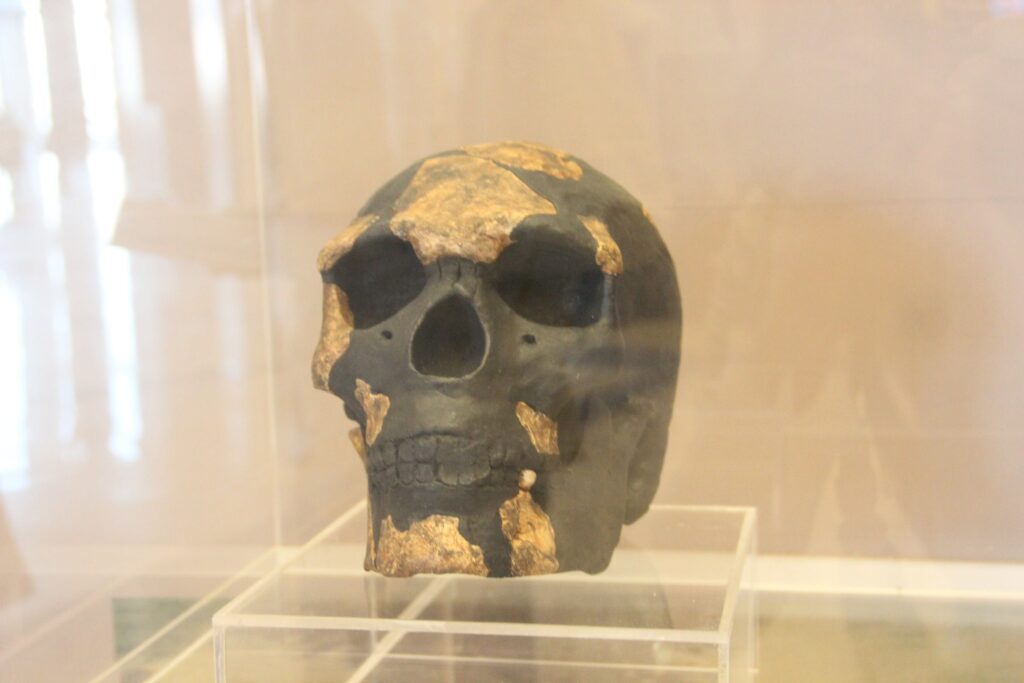
“Unlike other Middle Pleistocene fossils which are thought to belong to the early stages of the Homo sapiens lineage, Omo I possesses unequivocal modern human characteristics, such as a tall and globular cranial vault and a chin,” said co-author Dr Aurélien Mounier from the Musée de l’Homme in Paris. “The new date estimate, de facto, makes itthe oldest unchallenged Homo sapiens in Africa.”

The researchers say that while this study shows a new minimum age for Homo sapiens in eastern Africa, it’s possible that new finds and new studies may extend the age of our species even further back in time.

“We can only date humanity based on the fossils that we have, so it’s impossible to say that this is the definitive age of our species,” said Vidal. “The study of human evolution is always in motion: boundaries and timelines change as our understanding improves. But these fossils show just how resilient humans are: that we survived, thrived and migrated in an area that was so prone to natural disasters.”

Reproduction of the Omo-Kibish skull, Musée des Civilisations Noires de Dakar (Sénégal). Credit: GuillaumeG

“It’s probably no coincidence that our earliest ancestors lived in such a geologically active rift valley – it collected rainfall in lakes, providing fresh water and attracting animals, and served as a natural migration corridor stretching thousands of kilometres,” said Oppenheimer. “The volcanoes provided fantastic materials to make stone tools, and from time to time we had to develop our cognitive skills when large eruptions transformed the landscape.”

“Our forensic approach provides a new minimum age for Homo sapiens in eastern Africa, but the challenge still remains to provide a cap, a maximum age, for their emergence, which is widely believed to have taken place in this region,” said co-author Professor Christine Lane, head of the Cambridge Tephra Laboratory where much of the work was carried out. “It’s possible that new finds and new studies may extend the age of our species even further back in time.”

“There are many other ash layers we are trying to correlate with eruptions of the Ethiopian Rift and ash deposits from other sedimentary formations,” said Vidal. “In time, we hope to better constrain the age of other fossils in the region.”

The research was supported in part by the Leverhulme Trust, the Cambridge-Africa ALBORADA Research Fund and the Natural Environment Research Council and the National Environmental Isotope Facility. Céline Vidal is a Fellow of Fitzwilliam College, Cambridge.

tion.

Issue #123
The Australian Americans,

Steven & Evan Strong


Posted on

The Asteroid Shoving Mission

For those who think that Atlantis was brought down by a rock from space, the prospect of history repeating itself has long been a cause for worry, if not deep dread. Ever since comet Shoemaker-Levy crashed into Jupiter in 1994 with a force, that would, if directed at Earth, have destroyed our planet, many serious people, not just Hollywood heroes, have been awakened to the threat. And given the presence of thousands of such potentially deadly bolides in our solar neighborhood, it is clear that a real threat to continued life on Earth exists. The big question is what do we do about it? And now, we are happy to report, a new effort has been launched by NASA to push back against the threat from space.

Just in case some day, a threatening asteroid were to be found heading this way, the Double Asteroid Redirection Test (DART) mission, launched in November, 2021, will deploy a technology that, it is hoped, could save the planet, by preventing a hazardous asteroid from ever making it to Earth. DART is the first demonstration of the kinetic impactor technique to change the motion of an asteroid in space—in other words, ‘shoving’ the asteroid into a non threatening trajectory by crashing into it. In September 2022, the probe is intended to crash into the minor-planet moon Dimorphos of the double asteroid Didymos.

Dimorphos is NOT a threat to Earth, but the asteroid belt is believed to be a perfect testing ground to see if intentionally crashing a spacecraft into an asteroid is an effective way to change its course, should an Earth-threatening asteroid be discovered in the future. While, according to NASA, no ‘known’ asteroid larger than 140 meters in size has a significant chance to hit Earth for the next 100 years, as of October 2021, only about 40 percent of such asteroids have been found.

Ironically, while some seek to shove asteroids around to protect Earth, others have different ideas. One scheme under consideration involves nudging a football-field-sized asteroid into orbit around earth where it would be easier to exploit. Asteroids, it is thought, could prove virtual gold mines. Certainly plenty of platinum is to be found (all platinum on earth comes from space rocks), to say nothing of water, which could be turned into hydrogen fuel and oxygen for future interplanetary missions. Many asteroids are as much a 20% water.

Posted on

Has Planet 9 Already Been Spotted?

In 2016, astronomers, Konstantin Batygin and Michael Brown published a prediction—not yet a discovery—of a possible new planet lurking at the far periphery of the solar system, in an elongated path far beyond Pluto. Ever since, the hunt has been on for the missing planet. But, could the search for planet nine have already succeeded? Has a mysterious undiscovered planet, long envisioned somewhere beyond the orbit of Neptune by astronomers and alternative researchers alike have already made an appearance to probes from Earth, but gone unnoticed? A respected British Astronomer thinks so.

So far, no one has actually seen the theoretical planet. But, then again, maybe they have. Astronomer Michael Rowan-Robinson of Imperial College London has been combing through the data from a 1983 mission, in which he participated, and he now says he has located the illusive planet, or at least the part of the sky where it could be found. The data is taken from Infrared Astronomical Satellite (IRAS) readings.

Rowan-Robinson has published the findings of his research in arXiv, an open-access archive for articles on physics, mathematics, and computer science (https://arxiv.org/abs/2111.03831).

Observations of the planet Neptune have long led astronomers to believe another planet must be out there and interfering with its orbit. Pluto was found in 1930 by looking at objects on photographic plates, but it wasn’t large enough to account for the movement of Neptune. That anomalous movement is what arouses speculation about ‘planet 9’ (‘planet 10’, if you count Pluto)–aka, ‘Planet X.’ Arguments over the possibility of another planet beyond the orbit of Neptune have raged for over a century. As early as 1906, when he established The Lowell observatory in Flagstaff, Arizona, famed astronomer Percival Lowell was looking for his own version of Planet X, which he believed was indicated by the observed perturbations in the orbit of Neptune.

Studies of the sort have come from all parts of the world. In December 2015 the Journal of Astronomy of Astrophysics, published two Swedish papers claiming a new, relatively large, body out in the neighborhood of Pluto. Astronomer Wouter Vlemmings, co-author of both studies, reported observation of an object moving against the background stars which was then dubbed Gna, after a swift Nordic deity who delivers messages for Frigg, the goddess of wisdom. In 2018, Brazilian astronomer Rodney Gomes reported that his calculations showed the presence of a planet four times the size of Earth lying beyond the orbit of Pluto. Later, Carlos and Raul de la Fuente of Spain re-examined the data and concluded that, not only, must there be a planet such as proposed by Gomes, but that there must be an even bigger planet still further out which is influencing the first one. That such objects could have remained undiscovered for so long, we were told, is quite understandable.

Late in 2021 a team of space scientists published a paper in The Annual Review of Astronomy and Astrophysics suggesting that there may be an Earth- or Mars-sized planet orbiting beyond Neptune. They further suggest that simulations of the creation of the solar system show that such a planet may have been pushed from the outer regions of the solar system by Neptune and Uranus. Over the years, there have been several reports of large objects in the Kuiper belt (ie., Pluto and Eris), but until the Batygin and Brown discovery, none have been heavy enough to contend for the title of ‘Planet X’.

Posted on

Water in the Valles Marineris

As everyone knows, SpaceX entrepreneur Elon Musk plans to make humanity a multi-planetary species. In December, his celebrated ambition to colonize Mars got a big boost.

Until now, the conventional view of most Mars researchers on the availability of water for colonists from Earth, has been focussed on the poles, where massive deposits of water ice have been located. Unfortunately, the polar regions are also the coldest and most inhospitable that visitors from Earth might face, dropping to as low as 221 degrees below zero F. By contrast, areas near the equator, which bask in relatively temperate conditions–as high as 70 degrees F on a summer day–were thought to be lacking in much water. Picking the best site for a human landing on Mars, presented mission planners with a very difficult dilemma: should they go for the best weather, or the most water?

Now, thanks to a new discovery by the European Space Agency’s (ESA) ExoMars Orbiter, we have learned that an enormous canyon near the Martian equator, the Valles Marineris, likely contains vast quantities of water ice just below the surface, similar to permafrost on Earth —in fact, according to scientists, covering an estimated forty percent of over fifteen thousand square miles. Suddenly, the prospect of actually colonizing the red planet, looks a lot more realistic.

According to ESA data from the Trace Gas Orbiter’s (TGO) Fine-Resolution Epithermal Neutron Detector (FREND) instrument, unexpectedly high levels of hydrogen were found. Combined with oxygen, hydrogen makes water, which is the essential component for life on Earth, and, perhaps, as it may yet exist on Mars. The TGO survey focussed on a large region known as Candor Chaos, in the virtual center of the Valles Marineris on the Martian equator. More than 2,500 miles long, 10 times longer and five times deeper than the Grand Canyon of Arizona, the Valles Marineris is the largest canyon in the solar system. If it were on Earth, it could reach from New York to California.

Unlike the barren deserts previously explored by robotic probes from Earth, the scenery of Candor Chaos, could present visitors not only with some spectacular scenery, but maybe, some other, previously little-considered mysteries as well. Not only is it closer than previously considered sites to the Cydonia plain, made famous for the purported ‘Face on Mars,’ the area has at least one anomalous structure that has drawn some serious attention.

In a paper published in 2017 by the Journal of Space Exploration, researchers  George J. Haas, et al, studied a large three-sided pyramidal shape photographed by ‪Mars Global Surveyor (image E06-00269) and other spacecraft, in the Western Region of Candor Chasma. According to the paper’s abstract, in the 1970s the structure caught the attention of world renowned astronomer Carl Sagan, who was so intrigued by the 3-sided pyramidal structure, that he presented the image at the Royal Institution in London during his Christmas Lecture in 1977. Sagan also featured the image in his 1980 book and television series Cosmos in which he commented; ‪“The largest Mars pyramids… are much larger than the pyramids of Sumer, Egypt and Mexico. With the ancient eroded shape, they could be small hills, sandblasted for centuries, but they need ‪to be viewed from nearby.” Perhaps now they will be (https://www.tsijournals.com/articles/threesided-pyramidal-formation-in-the-western-region-of-candor-chasma-13507.html).

Given the right circumstances, water on Mars, we now know, could hold more oxygen than previously believed, theoretically enough to support aerobic respiration. A team led by scientists at Caltech and the Jet Propulsion Laboratory (JPL), has calculated that if liquid water exists on Mars, it could—under specific conditions—contain more oxygen than previously thought possible. According to the model, the levels could even theoretically exceed the threshold needed to support simple aerobic life.

“Oxygen is a key ingredient when determining the habitability of an environment, but it is relatively scarce on Mars,” said Woody Fischer, professor of geobiology at Caltech and a co-author of a Nature Geoscience paper on the findings, which was published in October 2019.  Their paper was entitled “O2 solubility in Martian near-surface environments and implications for aerobic life.” (https://authors.library.caltech.edu/88984/)

Scientists have speculated that the flowing surface water, in an environment where the temperatures are far below freezing, indicates that there might very well be large aquifers—pools of liquid water—beneath, but close to, the surface.

Clearly, many mind-blowing discoveries lie ahead.

Posted on

Drowned Civilization in Ancient China

‘Win some, lose some, and some get rained out,’ goes the old saying, and, it turns out, the same may be true of civilization. The great Liangzhu Civilization of China flourished over 5000 years ago, but then mysteriously collapsed, and, until recently, scholars could not understand why. Now new archaeological research suggests the problem was probably too much rain.

Distinguished by sophisticated architecture and brilliant hydraulic engineering demonstrating great mastery over water, inspiring dams, water reservoirs and canals in Liangzhu City on the banks of the Yangtze in Eastern China, the city earned a reputation as the “Venice of the East.” Now a new study led by geologist Christoph Spötl from the University of Innsbruck in Austria has looked at ancient mud deposits in the caves of the region and found that catastrophic flood conditions seemed to have overwhelmed the civilization. The culprit apparently was El Nino, a climate factor still operating in our own time, and blamed for numerous disasters (https://www.science.org/doi/10.1126/sciadv.abi9275).

Though some might argue that the evidence shows the continuing presence of familiar patterns, others see it a sign of ‘climate change’, and reason for alarm. Many meteorologists, indeed, link such patterns to a ‘climate crisis’ which they say exacerbates the frequency and severity of climatic extremes and variations.

In the fall of 2021, Chinese media reported unusual rains in Shanxi province with torrential downpours that lasted for days. Indeed, 59 observatories across Shanxi province all recorded historic levels of rain and that extreme weather has become the norm in northern China.

Will archaeologists of the future, wondering what happened to us, conclude that we were all wet.

Posted on

Seekers of the Lost Ark

By J. Douglas Kenyon

Raiders of the Lost Ark, filmmaker Steven Spielberg’s 1981 Indiana-Jones blockbuster, was not just fictional entertainment. Indeed, seventy two years earlier, a group of rogue archaeologists had set out—taboos notwithstanding—to excavate Jerusalem’s holy Temple Mount in search of the lost Ark of the Covenant and other treasures of King Solomon. In October of 2021, according to the Smithsonian Magazine and its web site, a new book by journalist Andrew Lawler, Under Jerusalem: The Buried History of the World’s Most Contested City, detailed how an illicit 1909 project failed in its clandestine intentions, but still managed to trigger a mideast crisis, involving Jerusalem, Palestine, the Ottoman empire, and  the British Army. (https://www.smithsonianmag.com/history/the-secret-excavation-of-jerusalem-180978888/?)

Valter Juvelius, an obscure Scandinavian scholar, Lawler explained, claimed to have unraveled a mysterious biblical code placing the treasure in an ancient tunnel beneath Jerusalem, and he persuaded Captain Montagu Brownlow Parker, veteran of the Boer war and brother of an English earl, to support the plan. With the substantial money raised, they secretly launched a project to carry out their quest. For the rest of their story you will need to read Lawler’s account, but be aware that the Juvelius mission was neither the first, nor the last, serious effort to recover the lost Ark.

After centuries of prominence in Hebrew history the relic first went missing with the beginning of the Israelite captivity by the Babylonians in 586 BCE. Almost eighteen centuries later,  the Knights Templars, it is believed by some, actually excavated the Temple Mount, in search of the Ark. More recently, scholars like Tudor Parfitt have suggested that over 2,000 years ago the Ark was taken to Africa by a group of fugitive Israelites now known as the Lemba tribe. In The Sign and the Seal best-selling author Graham Hancock argued that the Ark might be found in Ethiopia where it was brought by the Queen of Sheba.

In 2015 a Canadian-Israeli researcher, Harry Moskoff, attempted to resurrect the Jerusalem narrative. In Atlantis Rising Magazine, #111, we reported that Moskoff, who called himself a Jewish Indiana Jones, had been investigating the missing Ark for 25 years. Everyone, he said, had been looking in the wrong place, but the Ark, he said, may yet be found, and not far from where it was last seen. Citing extensive scriptural and historical evidence, Moskoff believed the Ark was originally secreted and protected in a special chamber built beneath the Holy of Holies by Solomon himself—who foresaw the Temple’s eventual destruction by invading armies. The conventional belief that the first temple was located on the Dome of the Rock, Moskoff thought, was wrong. Solomon’s Temple, he said, was elsewhere on the Temple Mountain. The true location, though, could be approached, Moskoff believed, by following a tunnel used for the cleansing of ritually impure priests, and which is mentioned in the Jewish Talmud. The tunnel, he said, was still intact, but, in an effort to honor the apparent wishes of its builders, had been blocked for a century and a half. The tunnel, he declared, could lead us to the original Holy of Holies, and, potentially, the original Ark of the Covenant. Details of  Moskoff’s theory are available in his book The A.R.K. Report—Secret for the Century (https://www.amazon.com/ARK-Report-Covenant-Tunnels-Israel/dp/1501024647).

Alternatively, could the lost Ark of the Covenant, or what’s left of it, actually be sitting on a dusty museum shelf in Harare Zimbabwe? That is the claim of University of London professor, and another Indiana Jones wannabe, Tudor Parfitt. But unlike the cavernous warehouse at the end of the Spielberg epic—where the Ark is seemingly lost once again—the professor said he knows precisely where the real thing is actually located.

It’s called the ‘Ngoma Lungundu’ by its present day guardians, the Lemba tribe of Zimbabwe, who claim to be descendants of the ancient priestly tribe of Levites who guarded the old testament Ark. The Ngoma, they say, came from the “great temple in Jerusalem.”

Parfitt conducted DNA studies of the Lemba priests which he says confirm their claim of Hebrew lineage from the time of the original Ark. Moreover, he has carbon-14 dated the wooden drum in the museum, which he believes is all that remains of the original ark, and he says everything checks out. The original gold covering, it is suggested, was stolen by the Babylonians when the Israelites were taken into captivity. Parfitt’s theory contradicts the better known notion, promoted by Graham Hancock, that the Ark was taken to Ethiopia. Parfitt has told his story in The Lost Ark of the Covenant, a book from HarperCollins (https://www.amazon.com/Lost-Ark-Covenant-500-Year-Old-Biblical-ebook/dp/B0014H32AI/ref=sr_1_1?).

Many other hypotheses have also been advanced for the fate of what is arguably the most important religious artifact in history. The last time we checked, though, the Ark is still lost.

Posted on

Ethiopian monuments 1,000 yrs older than thought

PULLMAN, Wash. –Rising as high as 20 feet, ancient stone monoliths in southern Ethiopia are 1,000 years older than scientists previously thought, according to a new study in the Journal of African Archaeology

A Washington State University research team used advanced radiocarbon dating to determine the often phallic-shaped monoliths, or stelae, at the Sakaro Sodo archeological site in Ethiopia’s Gedeo zone were likely created sometime during the first century A.D. 

The only other attempt to determine the age of the more than 10,000 stele monoliths located at various sites in the Gedeo zone was conducted by French scientists in the 1990s. It provided a far more modest construction date of around 1100 A.D. for the monuments of Tuto Fela in the northern part of Gedeo.

Under consideration as a UNESCO World Heritage Site, Sakaro Sodo and other archeological sites in the Gedeo zone have the largest number and highest concentration of megalithic stele monuments in Africa. The standing stones range widely in size, function, and arrangement in the landscape.

While many of the monoliths have fallen and/or are undecorated, a few have intricately wrought faces and other anthropomorphic designs carved into the stone that can be seen today. 

Posted on

How some can live past 100 – and how to crack it

Why it’s still a scientific mystery how some can live past 100 – and how to crack it

A 35-year-old man only has a 1.5% chance of dying in the next ten years. But the same man at 75 has a 45% chance of dying before he reaches 85. Clearly, ageing is bad for our health. On the bright side, we have made unprecedented progress in understanding the fundamental mechanisms that control ageing and late-life disease.

A few tightly linked biological processes, sometimes called the “hallmarks of ageing”, including our supply of stem cells and communication between cells, act to keep us healthy in the early part of our lives – with problems arising as these start to fail. Clinical trials are ongoing to see if targeting some of these hallmarks can improve diabetic kidney disease, aspects of immune function and age-related scarring of the lungs among others. So far, so good.

Unfortunately, big, unanswered questions remain in the biology of ageing. To evaluate what these are and how to address them, the American Federation For Aging Research, a charity, recently convened a series of meetings for leading scientists and doctors. The experts agreed that understanding what is special about the biology of humans who survive more than a century is now a key challenge.

These centenarians comprise less than 0.02% of the UK population but have exceeded the life expectancy of their peers by almost 50 years (babies born in the 1920s typically had a life expectancy of less than 55). How are they doing it?

How The Conversation is different: Accurate science, none of the jargon

Find out more

We know that centenarians live so long because they are unusually healthy. They remain in good health for about 30 years longer than most normal people and when they finally fall ill, they are only sick for a very short time. This “compression of morbidity” is clearly good for them, but also benefits society as a whole. In the US, the medical care costs for a centenarian in their last two years of life are about a third of those of someone who dies in their seventies (a time when most centenarians don’t even need to see a doctor).

The children of centenarians are also much healthier than average, indicating they are inheriting something beneficial from their parents. But is this genetic or environmental?

Centenarians aren’t always health conscious

Are centenarians the poster children for a healthy lifestyle? For the general population, watching your weight, not smoking, drinking moderately and eating at least five servings of fruit and vegetables a day can increase life expectancy by up to 14 years compared with someone who does none of these things. This difference exceeds that seen between the least and most deprived areas in the UK, so intuitively it would be expected to play a role in surviving for a century.

But astonishingly, this needn’t be the case. One study found that up to 60% of Ashkenazi Jewish centenarians have smoked heavily most of their lives, half have been obese for the same period of time, less than half do even moderate exercise and under 3% are vegetarians. The children of centenarians appear no more health conscious than the general population either.

Compared to peers with the same food consumption, wealth and body weight, however, they have half the prevalence of cardiovascular disease. There is something innately exceptional about these people.

The big secret

Could it be down to rare genetics? If so, then there are two ways in which this could work. Centenarians might carry unusual genetic variants that extend lifespan, or instead they might lack common ones that cause late-life disease and impairment. Several studies, including our own work, have shown that centenarians have just as many bad genetic variants as the general population.

Some even carry two copies of the largest known common risk gene for Alzheimer’s disease (APOE4), but still don’t get the illness. So a plausible working hypothesis is that centenarians carry rare, beneficial genetic variations rather than a lack of disadvantageous ones. And the best available data is consistent with this.

Over 60% of centenarians have genetic changes that alter the genes which regulate growth in early life. This implies that these remarkable people are human examples of a type of lifespan extension observed in other species. Most people know that small dogs tend to live longer than big ones but fewer are aware that this is a general phenomenon across the animal kingdom. Ponies can live longer than horses and many strains of laboratory mice with dwarfing mutations live longer than their full-sized counterparts. One potential cause of this is reduced levels of a growth hormone called IGF-1 – although human centenarians are not necessarily shorter than the rest of us.

Obviously, growth hormone is necessary early on in life, but there is increasing evidence that high levels of IGF-1 in mid to late life are associated with increased late-life illness. The detailed mechanisms underlying this remain an open question, but even among centenarians, women with the lowest levels of growth hormone live longer than those with the highest. They also have better cognitive and muscle function.

That doesn’t solve the problem, though. Centenarians are also different from the rest of us in other ways. For example, they tend to have good cholesterol levels – hinting there may several reasons for their longevity.

Ultimately, centenarians are “natural experiments” who show us that it is possible to live in excellent health even if you have been dealt a risky genetic hand and chose to pay no attention to health messages – but only if you carry rare, poorly understood mutations.

Understanding exactly how these work should allow scientists to develop new drugs or other interventions that target biological processes in the right tissues at the right time. If these become a reality perhaps more of us than we think will see the next century in. But, until then, don’t take healthy lifestyle tips from centenarians.

Authors

  •             Richard Faragher Professor of Biogerontology, University of Brighton
  •             Nir Barzilai Professor of Medicine and Genetics, Albert Einstein College of Medicine